Best Voltage Tester: Non-Contact vs Contact
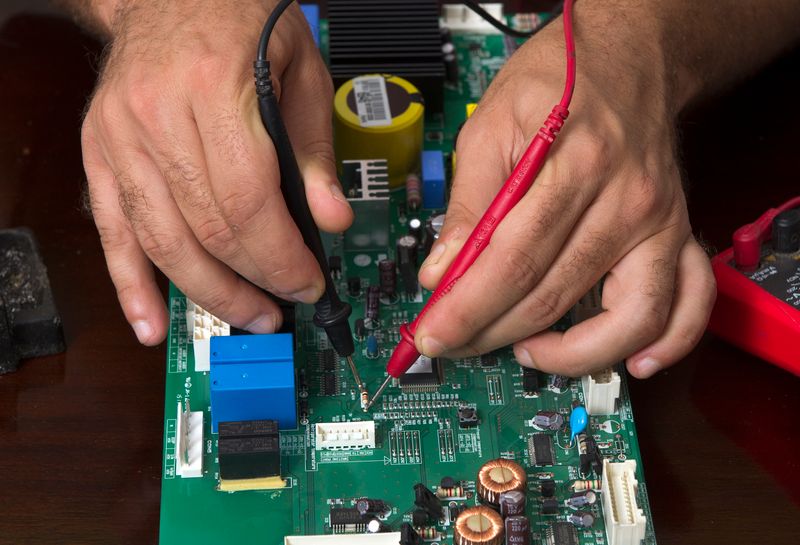
Before you touch a wire, you need to know if it’s live. A voltage tester is your first and most important line of defense against electrical shock. But not every voltage tester is created equal — and the wrong tool in the wrong situation can give you a false sense of security that’s genuinely dangerous.
This guide covers the three main types of voltage testers, when to use each, and the best models available in 2026.
The Three Types of Voltage Testers
Non-Contact Voltage Testers (NCVTs)
A non-contact voltage tester (NCVT) detects the electromagnetic field produced by AC voltage without touching the conductor. You simply point the tip near a wire, outlet, or switch — it beeps and lights up if voltage is present.
Advantages:
- Safest way to check for voltage — no physical contact required
- Fast, one-handed operation
- Works through outlet covers, wire insulation, and conduit
- Inexpensive and nearly indestructible
Limitations:
- Cannot measure voltage level — only presence or absence
- Can give false positives from phantom voltage (induced voltage in adjacent wires)
- Cannot test DC voltage
- Cannot test two-wire circuits like intercom or low-voltage control without both wires close together
NCVTs are an essential safety check tool — use one before touching anything. But they don’t replace a multimeter for diagnosis.
Solenoid Voltage Testers (Wiggy)
The solenoid tester — commonly called a “Wiggy” after the original Wigginton brand — uses a solenoid coil that vibrates and illuminates when voltage is present. Unlike most electronic testers, a Wiggy draws current from the circuit being tested (typically 25–50 mA), which serves two important purposes:
- Burns off phantom voltage — ghost voltages from inductive coupling dissipate when loaded; a Wiggy shows no indication on phantom voltage
- Tests polarity — it can identify hot and neutral by the direction of the LED indication
Solenoid testers are standard in commercial and industrial electrical work where phantom voltage from cable bundles is a daily issue.
Advantages:
- Immune to phantom voltage — shows real voltage only
- Rugged and simple — no batteries needed (draws power from the circuit)
- Tests polarity
- Preferred by many journeymen and inspectors
Limitations:
- Requires physical contact with terminals
- Only shows presence/absence and approximate voltage range (not exact measurement)
- The 50mA current draw can trip sensitive GFCI or AFCI breakers
Digital Voltage Testers
Digital voltage testers are a middle ground between NCVTs and full multimeters. They display the actual voltage reading on a screen while providing visual and audible indication. Many combine an NCV detector with contact probes, giving you both non-contact scanning and measured voltage in one tool.
Advantages:
- Shows actual voltage level (distinguishes 120V from 240V, for example)
- Some models detect AC and DC
- More information than a simple presence indicator
Limitations:
- More expensive than NCVTs
- Require probe contact for accurate readings
- Less rugged than solenoid testers
Best Non-Contact Voltage Testers
Fluke 1AC-A1-II (VoltAlert)
The Fluke VoltAlert is the industry benchmark for non-contact testing. It detects 90–1000V AC with three sensitivity zones — the tip lights up as you approach live voltage, giving a visual indication of proximity before you’re directly adjacent.
The VoltAlert is small enough to clip onto a shirt pocket and is virtually indestructible. A dead-battery indicator (the tip glows when the tester is powered and you press the test button against a grounded object) is a useful feature absent on cheaper models.
Detection range: 90–1000V AC Price: $20–$30 Best for: Electricians wanting the most reliable NCVT on the market
Klein Tools NCVT-1P
Klein’s flagship NCVT is compact, ergonomic, and competitively priced around $15–$20. It detects 50–1000V AC and provides both LED flash and audible alert. The pocket clip doubles as an ON/OFF switch — slide it down to activate, protecting against accidental battery drain.
The NCVT-1P is one of the best sellers in the category for good reason: reliable detection, simple operation, and excellent value.
Detection range: 50–1000V AC Price: $15–$20 Best for: General residential and commercial use
Klein Tools NCVT-6 (Dual Range)
The NCVT-6 adds a low-voltage mode (12–48V AC) in addition to standard detection (48–1000V AC). This matters for thermostat wire, doorbell transformers, and low-voltage lighting — circuits that standard NCVTs often miss.
If you work across both line-voltage and low-voltage systems, the NCVT-6 eliminates the need for separate tools.
Detection range: 12–48V AC (low), 48–1000V AC (high) Price: $25–$35 Best for: Electricians who also work with low-voltage systems
Milwaukee 2202-20 (Dual Range NCVT)
Milwaukee’s non-contact tester is built to survive the job site. The rotating tip design protects the sensor element when not in use, and the magnetic hanging strap keeps it accessible. Like the Klein NCVT-6, it covers low-voltage (24–1000V AC) and high-voltage ranges.
Detection range: 24–1000V AC Price: $25–$40 Best for: Electricians in the Milwaukee ecosystem, rugged job sites
Best Solenoid (Wiggy) Testers
Ideal 61-534 SureTest (Non-Contact + Solenoid Combo)
Ideal’s SureTest combines NCVT detection with a solenoid tester in one unit. The solenoid draws real current from the circuit, confirming live voltage without phantom interference. It handles 90–600V AC, indicates polarity with LED color coding, and the built-in NCV tip lets you scan before touching.
This combo approach is especially useful when you need to confirm a circuit is truly dead before proceeding.
Voltage range: 90–600V AC Price: $50–$70 Best for: Journeymen and inspectors who want phantom-voltage immunity
Fluke 2AC (Solenoid Style)
Fluke’s answer to the solenoid tester market features a heavy-duty housing, replaceable probes, and LEDs that indicate voltage level in three ranges. The Fluke 2AC draws approximately 40mA, giving it immunity to phantom voltage while being gentle enough to use on AFCI-protected circuits.
Voltage range: 100–600V AC Price: $60–$85 Best for: Professional electricians requiring phantom-voltage-immune testing
Greenlee GT-12 Wiggy
The GT-12 is the most traditional solenoid tester — a Wiggy-style design with the iconic vibrating solenoid action, LED indication, and simple polarity testing. No frills, extremely durable, and reliable for decades of use. Popular with utility and industrial electricians.
Voltage range: 90–600V AC Price: $50–$70 Best for: Industrial and utility electricians, those who prefer traditional Wiggy design
Best Combination / Digital Voltage Testers
Fluke T6-600 (Fieldpiece Voltage Tester)
The T6-600 is one of the most innovative voltage testers available. Its FieldSense technology allows it to measure AC voltage and current without inserting probes into the circuit — you simply clamp it around the wire. It shows actual voltage (up to 600V AC) and current simultaneously.
For electricians who need actual readings without always reaching for a full multimeter, the T6 is a game-changing tool.
Features: AC voltage measurement without probe contact, current measurement, continuity Price: $100–$130 Best for: Service electricians doing quick load checks and voltage verification
Klein Tools ET450 (Digital Voltage Tester)
Klein’s ET450 offers NCV detection plus contact probe voltage measurement (up to 1000V AC/DC) with a digital readout. It tests continuity with audible beep, detects polarity, and has a battery tester function. At around $50–$60, it’s a versatile tool that replaces both a basic NCVT and a simple analog tester.
Features: NCV, AC/DC voltage measurement, continuity, polarity Price: $50–$65 Best for: DIYers and apprentices wanting one tool for multiple tasks
Choosing the Right Tester for Your Situation
| Situation | Best Tool Type |
|---|---|
| Quick safety check before touching wires | Non-contact voltage tester (NCVT) |
| Confirming a circuit is truly dead (no phantom) | Solenoid tester (Wiggy) |
| Distinguishing 120V from 240V | Digital voltage tester or multimeter |
| Working on thermostat/low-voltage systems | Dual-range NCVT (low and high range) |
| Load measurements alongside voltage checks | Fluke T6-600 FieldSense |
| Industrial panel work with multiple bundled cables | Solenoid tester |
The Right Combination for Your Tool Kit
Most electricians carry more than one type:
- An NCVT — always on your person for quick safety checks
- A solenoid tester — for confirming circuits are truly dead in commercial work
- A multimeter — for actual voltage measurement and diagnostics
If you’re a homeowner or doing light residential work, a quality NCVT like the Fluke VoltAlert or Klein NCVT-1P paired with a basic multimeter covers 95% of situations.
Safety Notes
No tester is foolproof. Follow these rules regardless of what your tester shows:
- Test your tester — verify it detects voltage on a known-live outlet before trusting it on a circuit you believe is dead
- Use CAT-rated testers for panel work — cheap testers can fail catastrophically under high transient voltages
- Two-stage verification — use an NCVT first, then a solenoid or multimeter for confirmation before touching conductors
- Replace damaged testers immediately — cracked housings, damaged probes, or erratic behavior are cause to retire the tool
Voltage testers are inexpensive compared to the consequences of an electrical shock. Invest in quality, test before you touch, and verify twice when the stakes are high.

Amperage HQ Editorial Team
Independent trade-focused editorial team