Electrical Conduit Types Compared: EMT, PVC, Rigid, and Flexible
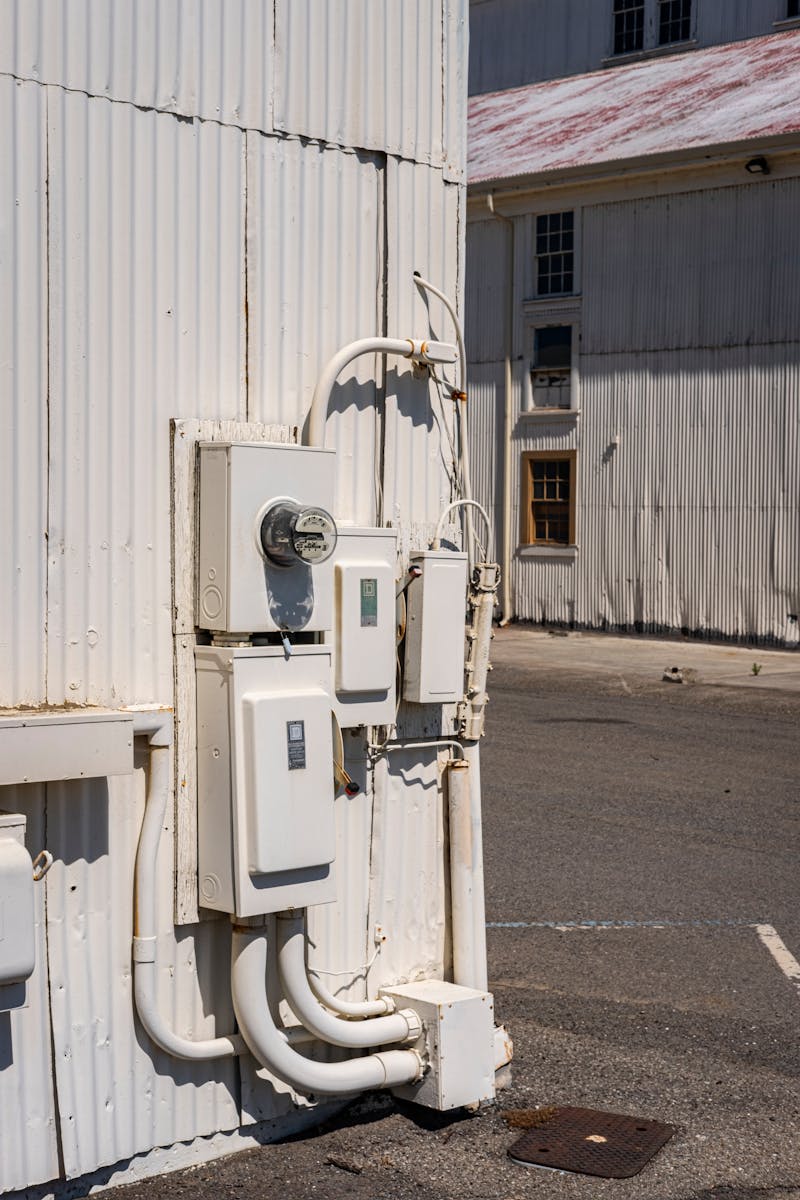
Electrical conduit protects conductors from physical damage, moisture, and chemical exposure while providing a system that can be rewired without opening walls. Choosing the right conduit type involves matching the material to the application — outdoor, indoor, burial, or flexible — along with understanding cost, installation complexity, and NEC requirements.
Quick Answer: Which Conduit Type Should You Use?
Use EMT for most exposed indoor garage, basement, and light commercial runs; PVC for underground or corrosion-prone outdoor work; rigid metal conduit where physical protection or service-mast strength matters; and flexible conduit only where movement, vibration, or short equipment connections require it.
Always verify the local code edition, wet-location fittings, grounding method, burial depth, and conductor fill before installing conduit. The conduit material is only one part of a compliant raceway system.
Why Use Conduit?
In many installations, NM-B cable (Romex) is the simplest and most economical wiring method. But conduit is required or preferred in several scenarios:
- Exposed wiring in garages, basements, and commercial spaces where cable would be subject to physical damage
- Outdoor and underground runs where direct burial cable isn’t appropriate or where future rewiring access is needed
- Wet locations where conduit with appropriate fittings provides better moisture protection
- Commercial construction where EMT is the standard wiring method
- Future proofing — conduit allows wire replacement without opening walls
EMT (Electrical Metallic Tubing)
What It Is
EMT is thin-wall steel conduit — the most common conduit type in commercial and industrial construction, and increasingly used in residential garages and exposed basement runs. It’s characterized by its light weight (compared to rigid steel), blue-gray finish, and compression or set-screw fittings.
Properties
- Material: Cold-drawn steel (zinc-coated inside and out)
- Wall thickness: Approximately 0.042”–0.065” depending on trade size — much thinner than rigid
- Available sizes: 1/2”, 3/4”, 1”, 1-1/4”, 1-1/2”, 2”, 2-1/2”, 3”, 3-1/2”, 4”
- Length: 10-foot sticks standard
- Connection method: Set-screw or compression couplings and connectors
- Color: Bright zinc inside, zinc or galvanized outside
NEC Applications
Per NEC Article 358, EMT can be used:
- In both exposed and concealed locations
- In dry, damp, or wet locations with appropriate fittings (watertight fittings for wet/damp)
- In concrete (when used with appropriate listed fittings)
- Not for direct burial without special corrosion protection
- Not where subject to severe physical damage
Bending EMT
EMT is field-bendable using a conduit bender — a tool that creates precise bends without kinking the conduit. Common bends:
- 90-degree bend (stub-up or corner)
- Offset (moves conduit around an obstacle)
- Saddle (three-point offset over a pipe or obstacle)
EMT benders: Available in each trade size. A 1/2” and 3/4” bender handle the most common residential/light commercial sizes. Klein Tools, Ideal Industries, and Greenlee are the dominant brands.
Advantages and Disadvantages
Advantages:
- Lightweight and easy to work with
- Bends easily in the field
- Provides a good equipment ground path through the metal conduit itself
- Rewirable — pull new wire without opening walls
- Accepted in nearly all applications (with appropriate fittings)
Disadvantages:
- More labor-intensive than cable methods
- Requires bending skills
- Metal fittings can be harder to tighten in tight spaces
- Not for direct burial without corrosion protection
PVC Conduit (Schedule 40 and Schedule 80)
What It Is
PVC (polyvinyl chloride) conduit is plastic conduit — lighter than metal, corrosion-resistant, and commonly used for underground and outdoor runs.
Schedule 40 vs Schedule 80
- Schedule 40 PVC: Standard wall thickness, appropriate for most conduit-in-slab and burial applications. Gray color (electrical) or white (plumbing — not for electrical use).
- Schedule 80 PVC: Thicker wall, greater crush strength. Used in applications where physical damage is a greater concern (exposed surfaces in some commercial applications, above-grade outdoor where more protection is needed).
Important: Electrical PVC conduit is gray. White PVC is plumbing pipe and is NOT listed for electrical use.
Properties
- Material: PVC (polyvinyl chloride)
- Fittings: Solvent-welded PVC fittings (no-hub PVC cement required for permanent connections)
- Available sizes: Same as EMT, 1/2” through 4”+
- Temperature limitations: PVC becomes brittle below -20°F and expands significantly with temperature changes — expansion fittings required for long runs
NEC Applications
Per NEC Article 352, PVC conduit can be used:
- Exposed (Schedule 80 required where subject to physical damage)
- Concealed
- Direct burial — the most common reason to choose PVC
- In wet and corrosive locations
- Underground under buildings (concrete-encased)
Not for use:
- Where exposed to temperatures exceeding the conduit’s listing
- Where subject to severe physical damage without Schedule 80
- In certain hazardous locations (consult NEC Article 352)
Burial Depth Requirements (NEC Table 300.5)
PVC conduit minimum cover depths:
| Location | PVC Conduit Depth |
|---|---|
| General | 18 inches |
| Under a building | 0 inches (direct contact permitted) |
| Under streets, roads, and driveways | 24 inches |
| Under residential driveways (one/two-family only) | 18 inches |
| In or under 4” concrete slab | 4 inches |
Advantages and Disadvantages
Advantages:
- Corrosion-resistant — ideal for direct burial and coastal environments
- No grounding path through conduit (separate ground wire required — considered both advantage and disadvantage)
- Easy to work with — no bending tool for gentle bends (PVC can be heated with a heat gun for bends)
- Lower material cost than metal conduit
Disadvantages:
- PVC does not serve as a ground path — separate EGC required
- Expands and contracts with temperature (requires expansion fittings in long runs)
- Brittle when cold (care needed in freezing temperatures)
- Schedule 40 not suitable for applications with physical damage risk
Rigid Metal Conduit (RMC)
What It Is
RMC (Rigid Metal Conduit) is heavy-wall steel conduit — the industrial standard for maximum protection. Also called rigid steel or rigid galvanized conduit (RGC). Threaded at both ends, uses threaded fittings and couplings.
Properties
- Material: Galvanized steel (most common) or stainless steel or aluminum for corrosive environments
- Wall thickness: Approximately 0.141” for 1/2” trade size — significantly thicker than EMT
- Fittings: Threaded — requires threaded couplings, locknuts, and connectors
- Length: 10-foot sticks with factory threads
- Weight: Significantly heavier than EMT
NEC Applications
RMC may be used in all locations — above ground, below ground, in concrete, in hazardous locations, in corrosive environments (with appropriate material selection). It’s permitted everywhere any other conduit is permitted, and it’s the required method in some high-protection situations.
Most common uses:
- Service entrance conduit from meter to main panel
- Outdoor service masts
- Industrial locations with severe physical damage risk
- Hazardous (classified) locations
Advantages and Disadvantages
Advantages:
- Maximum physical protection
- Can be direct-buried (minimum 6” cover with RMC)
- Threaded fittings provide excellent watertight connections
- Serves as ground path
- Longest burial depth reduction — only 6 inches needed
Disadvantages:
- Heavy — installation is labor-intensive
- Requires pipe vise and threader for field cuts
- Most expensive metal conduit option
- Overkill for most residential applications
Intermediate Metal Conduit (IMC)
IMC is a middle ground between EMT and RMC — heavier than EMT but lighter than RMC. It accepts the same fittings as RMC (threaded) and is permitted in the same locations. Less common than either EMT or RMC but useful when additional strength over EMT is needed without the full weight of RMC.
Flexible Metal Conduit (FMC) and Liquidtight FMC
FMC (Flexible Metal Conduit)
FMC is corrugated, flexible metal conduit — spirally wound interlocking steel that provides flexibility for equipment connections, motor connections, and areas where rigid conduit is difficult to run.
Common uses:
- Final connection to motors and equipment that vibrate (AC units, compressors)
- Luminaire connections in dropped ceilings
- Short transition between rigid conduit and fixed equipment
Limitations: Not suitable for wet locations, direct burial, or underground without liquidtight jacket.
LFMC (Liquidtight Flexible Metal Conduit)
LFMC is FMC with a PVC jacket — provides the flexibility of FMC with watertight protection suitable for outdoor equipment connections.
Common uses:
- Air conditioning and refrigeration equipment connections outdoors
- Outdoor equipment with vibration (generators, pumps)
- Indoor wet locations
Maximum length: NEC limits FMC and LFMC use to 6 feet for certain applications (equipment connections). Longer runs must use rigid conduit methods.
Conduit Selection Quick Reference
| Application | Recommended Conduit |
|---|---|
| Garage interior exposed runs | EMT |
| Underground between house and detached garage | PVC Schedule 40 or HDPE |
| Service entrance mast | RMC |
| Outdoor equipment connection (AC unit) | LFMC |
| Interior commercial | EMT |
| Direct burial in soil | PVC Schedule 40 |
| Concrete-encased underground | PVC Schedule 40 or 80 |
| Corrosive chemical environment | PVC Schedule 80 or FRE |
| Panel interior connections | EMT or rigid |
Conduit Fittings and Accessories
Connectors
Attach conduit to boxes:
- Set-screw connectors (EMT): Tighten with a hex wrench; suitable for dry locations
- Compression connectors (EMT): Use the exact product listing; ordinary compression construction does not prove a wet-location rating
- Threaded couplings (RMC): Thread onto conduit; use with locknuts and bushings
Our set screw vs. compression EMT fittings guide explains how to check location markings, concrete-tight and raintight listings, throat options, bonding, and installation access.
Couplings
Connect two sections of conduit:
- EMT couplings: Set-screw or compression types
- PVC couplings: Solvent-welded
Pulling Elbows
90° pull fittings with a removable cover for pulling wire around corners. Required when the total number of bends in a conduit run exceeds NEC limits (360° total in any run between boxes).
Straps and Supports
Conduit must be supported within 3 feet of each box and every 10 feet for EMT (check NEC Table 358.30(A) for specifics). Straps and hangers should be listed for the conduit type.
Choosing the Right Fittings for Wet Locations
Any conduit installed in a wet or damp location requires fittings rated for that location:
- EMT: Use fittings specifically identified for the actual location; not every compression fitting is raintight
- PVC: Solvent-welded fittings are inherently watertight
- LFMC: Use liquidtight fittings
Using dry-location fittings in wet environments allows water into the conduit — defeating the purpose and creating corrosion at connections.
Selecting the right conduit type simplifies installation, ensures code compliance, and provides the right level of physical protection for the application. For residential homeowners and light commercial work, EMT for exposed interior runs and PVC for underground is the most common and cost-effective combination.
Related Conduit and Wiring Guides
- How to Bend EMT Conduit covers common bends after you select EMT.
- How to Run New Electrical Circuits explains planning, routing, and circuit layout.
- Garage Electrical Code Requirements is useful for exposed garage conduit.
- Outdoor Electrical Work covers wet-location and exterior wiring choices.
- Wire Gauge and Ampacity helps match conductor size to the circuit and raceway.
Connect conduit choice to installation details
These guides cover bending, circuits, garages, outdoor work, wire sizing, and safe electrician handoff notes.
- How to bend EMT conduit
Review 90-degree bends, offsets, and saddles before choosing EMT.
- Running new circuits
Connect raceway choice to circuit planning and routing constraints.
- Garage electrical code requirements
Check common garage constraints before planning exposed wiring.
- Outdoor electrical work
Compare conduit and weather-exposure considerations outside the house.
- Wire gauge and ampacity
Understand conductor sizing questions that travel with conduit selection.
- Electrician handoff checklist
Use the worksheet to organize circuit, load, photo, and permit notes for a licensed electrician.

Amperage HQ Editorial Team
Independent trade-focused editorial team