Electrical meter box replacement cost: Scope and quotes
Quick answer
Published 2026 market observations put many U.S. electrical meter box replacement jobs around $500 to $2,300, while broader national estimates reach $5,000. The useful price is a local quote that separates the meter socket from service conductors, mast or underground work, exterior disconnect, panel, permits, utility coordination, and repairs.
Common questions
- How much does it cost to replace an outside electrical meter box?
- Published 2026 market observations range from about $500 to $2,300 for many jobs and up to $5,000 in broader national data. Location, amperage, equipment type, utility requirements, permits, conductors, mast or underground work, disconnects, and panel scope can change the price substantially.
- Who owns the electric meter box?
- A common arrangement is utility ownership of the revenue meter and customer ownership of the socket or meter base, but the boundary varies. Ask the serving utility to identify ownership, approved equipment, disconnect and reconnect steps, and responsibility for overhead or underground conductors.
- Can an electrician replace a meter box without the utility?
- Usually not as an independent, energized job. The electrician, utility, and authority having jurisdiction may need to coordinate the permit, safe disconnection, inspection release, meter installation, and reconnection in a utility-specific order.
- Is a meter box replacement the same as a panel upgrade?
- No. The meter socket holds the utility meter; the electrical panel distributes power to branch circuits. A quote may cover only the socket, broader service-entrance equipment, a meter-main combination, the panel, or a complete service upgrade.
Source note: Reviewed September 2026 against Unitil service requirements, Seattle's 2026 utility standards and 2023 electrical code resources, Seattle permit guidance, Eaton metering instructions, and dated U.S. and Denver cost datasets. The serving utility, local authority, approved equipment, and site conditions control each job.
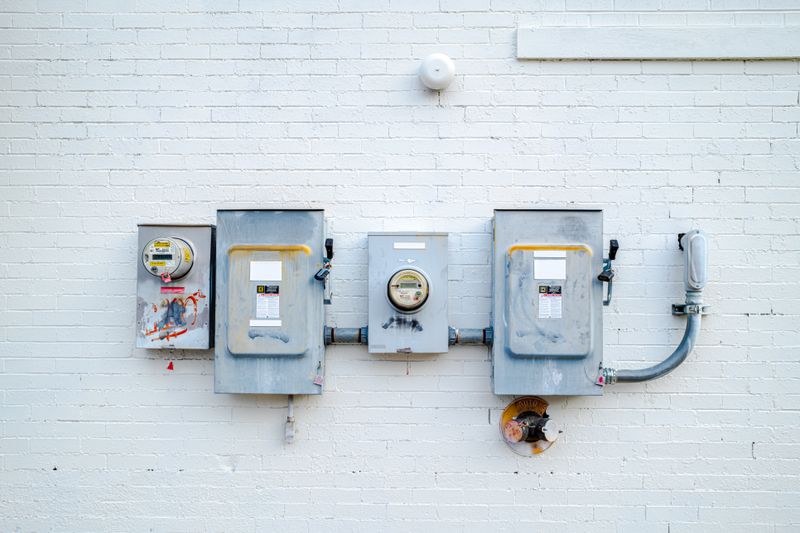
Electrical meter box replacement cost is usually a four-figure planning question, but the box alone does not define the job. Angi’s U.S. cost data, updated July 8, 2026, spans $500 to $5,000 and reports about $1,000 as typical. Its Denver data, updated June 29, 2026, reports $550 to $2,300, with a $1,058 local average.
Treat those figures as market observations, not a price promise. A like-for-like meter socket replacement and a full service rebuild are different projects even when both quotes say “replace meter box.” Compare written scope before comparing totals.
Stop first if the meter area looks unsafe
Stay away and call the electric utility’s emergency line if you see arcing, sparks, scorching, smoke, a burning odor, unusual heat, buzzing, storm damage, a loose enclosure, or pulled service equipment. Call 911 for fire, immediate danger, or a downed line. Keep other people clear.
Do not open the enclosure, touch it, remove a seal, pull the meter, or assume the main breaker de-energizes the meter socket. Do not operate a switch or breaker beside visibly damaged, wet, hot, or arcing equipment. Service conductors may remain energized until the utility makes the work area safe.
What “meter box” can mean
People use meter box, meter base, meter socket, and power meter box interchangeably. A quote should use component names:
| Component | What it does | Is it automatically included? |
|---|---|---|
| Revenue meter | Measures energy for billing | Usually utility-owned; confirm locally |
| Meter socket or base | Holds and connects the meter | Core item in a socket-replacement quote |
| Enclosure | Protects live parts from access and weather | May be integral to the socket or meter-main |
| Mast and weatherhead | Route an overhead service to the attachment point | No; separate service-entrance scope |
| Service conductors | Carry power to and from the meter equipment | No; identify line-side and load-side work |
| Exterior disconnect | Provides an outside service or emergency disconnect where required | No; may change equipment and grounding scope |
| Main panel | Distributes power to branch circuits | No; this is a panel replacement or service upgrade |
Unitil’s service-equipment responsibility guide illustrates a common boundary: the utility owns its meter, while the customer owns the socket, weatherhead, service-entrance cable, and panel. That is an example, not a national rule. Your serving utility must identify the boundary for your address.
Cost framework: classify the scope before the price
Use the published figures only after placing the project in one of these buckets:
Like-for-like meter socket replacement
This is the narrowest scope: similar service rating and location, compatible conductors, no panel replacement, and no mast, trench, structural, or major grounding correction. It is most likely to fall near the lower end of local quotes.
Even a “simple” replacement still may require an approved socket, permit, utility disconnect, inspection, outage, reconnection, weatherproof fittings, labeling, and finish repair.
Meter socket plus service-entrance repairs
The price rises when the electrician must replace deteriorated conductors, conduit, grounding or bonding components, damaged siding support, an overhead mast, or an underground riser. Storm damage belongs in this category until the utility and electrician prove otherwise; see the storm-damaged mast and weatherhead guide.
Meter-main, relocation, or full service upgrade
A new exterior disconnect, meter-main combination, higher service rating, relocated equipment, new trench, new panel, or multiple-meter arrangement can push the project toward or beyond the upper end of published ranges. A higher amp rating must follow an actual panel and service load calculation, not an assumption that bigger is automatically better.
Our electrical panel upgrade cost guide covers the separate panel and full-service budget. Do not compare its total with a socket-only bid.
Why two meter box quotes can be far apart
Price changes with:
- Service rating and configuration: 100-, 200-, 320/400-amp, single meter, multiple meters, or a meter-main combination
- Utility-approved equipment: ring or ringless design, bypass requirements, overhead or underground entry, available fault rating, and local approved-product lists
- Damage beyond the enclosure: burned jaws or lugs, heat-damaged conductors, corrosion, water entry, a pulled mast, or a compromised mounting surface
- Location: required relocation, working clearance, meter height, access, trenching, wall construction, and siding or masonry repair
- Code and permit scope: grounding and bonding, exterior disconnect rules, surge protection, labeling, and corrections triggered by the locally adopted code
- Coordination: permit, utility application, disconnect and reconnect, inspection release, outage timing, and emergency service
- Panel condition: obsolete, damaged, undersized, or incompatible equipment may turn a socket replacement into broader service work
Eaton’s metering installation instructions warn of lethal voltage and direct installers to follow utility specifications, model-specific assembly, bonding, torque, and inspection requirements. This is why an internet parts price is not an installed-project price.
Who coordinates the replacement?
A normal project can involve three authorities:
- The serving utility approves the meter location and equipment, controls its meter and seals, and defines disconnect and reconnect procedures.
- The licensed electrical contractor diagnoses the damage, selects compatible approved equipment, writes the scope, performs customer-side work, and coordinates the outage.
- The authority having jurisdiction (AHJ) issues the permit, applies the locally adopted code and amendments, inspects the work, and communicates approval as local procedure requires.
For a current local example, Seattle publishes 2026 Standards for Electric Service, while its AHJ enforces a 2023 Seattle Electrical Code. Seattle’s electrical permit guidance says altered electrical wiring or equipment requires a permit and identifies service and final inspections. Other cities and utilities can use different editions, amendments, equipment lists, fees, and sequences.
Review the site’s electrical permit and inspection guide for questions to ask your AHJ. Do not buy a socket before the utility and electrician confirm that it is accepted for the service.
Apples-to-apples meter box quote worksheet
Ask each bidder to mark included, excluded, or allowance for every row:
| Quote item | Detail the proposal should state |
|---|---|
| Diagnosis | Failed component, visible damage, and reason repair or replacement is proposed |
| New equipment | Manufacturer, catalog number, amp rating, enclosure type, meter-main or socket-only, and utility approval |
| Conductors and raceway | Exact line-side and load-side segments included; overhead, mast, riser, or underground exclusions |
| Disconnect | Existing or new exterior disconnect and its role in the service design |
| Panel | Unchanged, reconnected, repaired, replaced, or excluded |
| Grounding and bonding | Components inspected, retained, corrected, or replaced |
| Utility work | Application, engineering if needed, disconnect, meter handling, reconnect, and utility charges |
| Permit and inspection | Permit owner, fees, inspection stages, corrections, and approval handoff |
| Site restoration | Siding, masonry, flashing, paint, trench, landscaping, drywall, and debris removal |
| Schedule | Planned outage, emergency procedure, equipment lead time, inspection, and weather contingencies |
| Closeout | Labels, test or commissioning records, permit signoff, utility release, warranty, and photos |
Also ask whether the price is fixed or estimated, what concealed conditions can trigger a change order, who authorizes one, and whether after-hours work changes the rate. Provide the same photos and project notes to every bidder without approaching or opening the equipment.
Repair, replace, or upgrade?
A qualified electrician may determine that a listed replacement component is available and the enclosure, conductors, and connections remain suitable. In other cases, heat, corrosion, obsolete parts, damaged jaws, compromised conductors, or utility rules make complete replacement necessary.
Do not request a service upgrade merely because the socket needs replacement. Conversely, do not approve a socket-only repair when the assessment identifies mast, conductor, disconnect, panel, grounding, or capacity work. The written diagnosis should connect the observed condition to the proposed scope.
What to do next
Call the serving utility first for active damage, arcing, storm displacement, or questions about its meter. For planned work, gather the utility name, address, visible service rating, overhead or underground service type, closed-view photos, symptoms, recent work, and future electrical loads.
Then request two or three itemized quotes from properly licensed contractors using the worksheet above. Take the electrician handoff checklist to each site visit, verify the permit and utility sequence before authorizing work, and keep the approval and warranty records after power is restored.
Price sources and review basis
- Angi national meter-box cost data, updated July 8, 2026: U.S. consumer-project estimates by amperage and scope; $500–$5,000, with about $1,000 reported as typical.
- Angi Denver meter-box cost data, updated June 29, 2026: Denver market estimate of $550–$2,300 and a $1,058 average.
- Unitil installation requirements: utility approval, meter location, socket listing, seals, inspection approval, and customer/utility work boundaries.
- Seattle City Light, Seattle SDCI, and Eaton resources linked above: current utility, AHJ, adopted-code, permitting, and manufacturer-instruction examples reviewed in September 2026.

Amperage HQ Editorial Team
Independent trade-focused editorial team