How to Pass an Electrical Inspection: Top 15 Failure Reasons
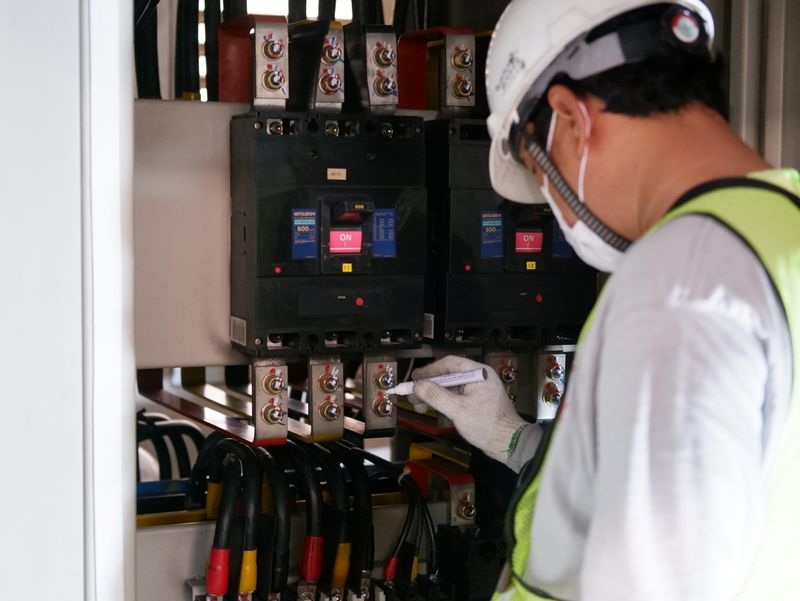
Failing an electrical inspection wastes time and delays your project — but it’s avoidable. The same mistakes appear on inspection reports again and again. Understanding the most common failure reasons before you start work means you’ll likely get through inspection on the first try.
This guide covers the 15 most common electrical inspection failures and how to prevent each one.
The 15 Most Common Electrical Inspection Failures
1. Missing or Incorrect GFCI Protection
GFCI protection failures are the most common inspection finding in residential electrical work. The NEC requires GFCI protection in:
- Bathrooms (all receptacles)
- Garages (all receptacles)
- Outdoors (all receptacles)
- Crawl spaces
- Unfinished basements
- Kitchens (countertop receptacles, and 2023 NEC expands this to all receptacles within 6 feet of a sink)
- Near swimming pools, hot tubs, fountains
- Boathouses
How to prevent it: Know the GFCI requirements for your specific NEC version and jurisdiction. When in doubt, add GFCI protection — it’s never wrong to have more protection than minimum required.
How to test: Use an outlet tester with GFCI test function (Klein RT210 or similar) and verify GFCI protection works at every required location.
2. Missing AFCI Protection
AFCI (arc fault circuit interrupter) protection has expanded significantly across NEC editions. The 2023 NEC requires AFCI on all 15A and 20A, 120V circuits in:
- Bedrooms
- Living rooms
- Kitchens
- Dining rooms
- Bathrooms
- Hallways
- Laundry areas
Common mistake: Installing standard breakers on circuits in these areas in a jurisdiction that has adopted recent NEC editions.
How to prevent it: Know your local NEC adoption and install AFCI (or AFCI/GFCI combo) breakers wherever required. A combination AFCI/GFCI breaker covers both requirements in one unit.
3. Wire Not Secured to Framing Properly
NEC requires NM-B cable to be:
- Secured within 12 inches of each box
- Secured every 4.5 feet along the run
- Not run in a way that allows the cable to be damaged (no sharp bends, no unsupported long spans)
Common mistakes: Forgetting to staple cable near each box; leaving long unsupported loops of cable in attics or crawl spaces; using staples that cut into the cable jacket.
How to prevent it: Staple as you go. Use plastic cable staples (not metal) and don’t overtighten them — the staple should grip without deforming the cable jacket.
4. Incorrect Wire Gauge
Using 14 AWG wire on circuits that should be 12 AWG (or vice versa) is a common error. Key requirements:
- 15A circuit: 14 AWG minimum
- 20A circuit: 12 AWG minimum
- 30A circuit: 10 AWG minimum
A common variant: 14 AWG wire on a 20A circuit — correct wire size is 12 AWG for 20A circuits. Kitchen small appliance circuits must be 20A, which requires 12 AWG.
How to prevent it: Color-code your work. White-sheathed NM-B is 14/2; yellow is 12/2; orange is 10/2. When you see yellow cable, you know it’s on a 20A circuit.
5. Overcrowded Electrical Boxes
NEC Section 314.16 specifies box fill calculations — each conductor, device, clamp, and fitting takes up volume, and the box must be large enough. Inspectors measure box fill frequently and fail overcrowded boxes routinely.
Quick guidelines:
- Standard 2” × 4” single-gang box: Maximum 5 × 14 AWG conductors or 4 × 12 AWG
- A device (switch or outlet) counts as 2 conductors
- Each clamp counts as 1 conductor
When in doubt, use the largest box that fits the application. 4-inch square boxes with single or double-gang covers provide significantly more volume than single-gang rectangular boxes.
How to prevent it: Count conductors before selecting box size. When adding to existing boxes, verify fill isn’t exceeded.
6. Open Junction Boxes (Missing Covers)
Every junction box must have a cover. No exceptions. Open boxes are among the most cited inspection findings.
How to prevent it: Walk the job and verify every junction box has its cover installed before calling for inspection. This includes boxes in attics, crawl spaces, and inside cabinet spaces that are easy to forget.
7. Improper Cable Entry at Boxes
Cables entering boxes must:
- Enter through an approved knockout (not a hole drilled through the box)
- Be secured with a connector or clamp within 12 inches of the box for NM-B cable
- Have all but one of the insulation layers (or the jacket) intact to the inside of the box
Common mistakes:
- NM-B cable entering a box through a bare knockout without a connector (required for metal boxes)
- Cable jacket stripped back too far, leaving conductors exposed before they enter the box
- Multiple cables entering through a single knockout without a multi-cable connector
How to prevent it: Use appropriate connectors for cable entry. For metal boxes, use NM-B clamp connectors. Plastic boxes with built-in knockouts self-clamp, but verify the cable is seated properly.
8. Reversed Polarity
Reversed polarity means the hot and neutral are swapped at the receptacle. The outlet powers devices normally, but the neutral is at switched potential — a shock hazard when handling a lamp socket or similar device.
Cause: Connecting the black wire to the neutral (silver) terminal and the white wire to the hot (brass) terminal at the outlet.
How to prevent it: Black to brass (hot), white to silver (neutral), green/bare to green (ground). Use an outlet tester after installation — reversed polarity shows immediately.
9. No Grounding Conductor (Open Ground)
Modern wiring requires a grounding conductor (equipment grounding conductor, EGC) at all outlets. Installing a 3-prong outlet without connecting a ground wire creates a shock hazard and fails inspection.
Exception under NEC: In circuits where grounding is not available (such as old wiring without a ground path), GFCI outlets can be installed and labeled “No Equipment Ground” — this is code compliant but does not provide an actual equipment ground.
How to prevent it: Run grounding conductors throughout all new wiring. Never install a 3-prong receptacle without a connected ground.
10. Neutral and Ground Bonded in a Subpanel
In the main service panel, the neutral bar and ground bar are bonded together and to the grounding electrode. In a subpanel, they must be separated — on distinct, isolated bars.
The consequence of bonding in a subpanel: Parallel paths for neutral current exist, causing current on the grounding conductor — a shock hazard and a source of GFCI nuisance trips.
How to prevent it: When installing a subpanel, confirm the neutral bar is isolated from the panel enclosure (use a floating neutral bar). The ground bar bolts directly to the metal enclosure; the neutral bar uses an insulating standoff.
11. Panel Clearances Not Met
NEC requires clear workspace in front of electrical panels:
- 30 inches wide (minimum)
- 36 inches deep (minimum)
- 6’6” headroom
Common violations: Panels installed in closets that don’t meet these dimensions; panels with shelving installed in front; panels in mechanical rooms with water heaters or other equipment blocking access.
How to prevent it: Measure the working space before installing or locating a panel. If adding a panel in an existing space, verify all clearances.
Use the electrical panel working-clearance checklist to document depth, width, headroom, door swing, access, storage, and AHJ questions before the inspection.
12. Double-Tapped Breakers
Double-tapping is connecting two circuit wires to a single breaker terminal when the breaker is rated for one conductor only. Most single-pole residential breakers allow only one wire per terminal.
Exception: Some breakers (typically labeled or listed for it) accept two conductors — Square D QO breakers, for example, allow 2 conductors in some applications. Verify the breaker listing.
How to prevent it: One circuit, one breaker. If you need another circuit, add another breaker.
13. Missing Protective Bushings on Conduit Edges
When conduit enters a box or other metal enclosure, the sharp metal edge of the conduit must be protected with a plastic bushing or equivalent protection — otherwise the edge can cut the wire insulation.
How to prevent it: Install conduit bushings on every conduit-to-box entry where the conduit end is exposed to conductor movement.
14. Outdoor Receptacles Not Weather Protected
Outdoor receptacles require:
- In-use covers (also called “while-in-use” covers) that protect the plug connection even when something is plugged in — box-style covers that close over the plug
- GFCI protection
Older flip-up covers are no longer acceptable for outdoor receptacles in NEC 2020+ jurisdictions — the cover must protect the plug connection even when in use.
How to prevent it: Install in-use covers on all outdoor receptacles. Common manufacturers: TayMac, Hubbell, Leviton all make compliant in-use covers.
15. Service Entrance Wiring Issues
Service entrance inspections look for:
- Weatherhead in good condition (no missing drip loops, no damaged conduit)
- Service entrance conductors properly strapped to the structure
- Meter socket properly sealed
- Main panel properly bonded to grounding electrode system
- No exposed conductors between weatherhead and meter socket
How to prevent it: During service entrance work, follow manufacturer instructions for the meter socket and panel, verify all required bonding conductors are installed, and verify the weatherhead drip loop is properly configured.
Pre-Inspection Checklist
Walk through this checklist before calling for inspection:
Wiring and Cables
- All cables secured within 12” of boxes and every 4.5 feet
- Cable gauge matches circuit amperage (yellow = 12 AWG/20A, white = 14 AWG/15A)
- All cables protected from physical damage (drill bits, nails, framing)
- Cable entries at boxes properly secured with clamps or connectors
Boxes
- All boxes covered (no open junction boxes anywhere)
- Boxes properly sized (not overcrowded)
- Metal boxes have grounded with bonding screw or pigtail
Outlets and Devices
- All outlets tested with outlet tester (correct polarity, ground present)
- GFCI protection verified in all required locations
- All cover plates installed
Panel
- Panel directory filled in (circuits labeled)
- No double-tapped breakers
- No open knockouts in panel
- Correct breaker sizes for wire gauges
- AFCI/GFCI breakers installed where required
Clearances
- 36” of clear working space in front of panel
- All attic access maintained (no boxes buried in insulation)
- All electrical equipment accessible for future service
Special Locations
- Outdoor receptacles have in-use covers
- Bathroom circuits are 20A with GFCI
- Kitchen has two 20A small appliance circuits with GFCI
- Garage outlets are GFCI protected
What to Do If You Fail
Failing an inspection is not a disaster — it’s feedback. The inspector’s correction notice specifies exactly what needs to be fixed. Address each item systematically:
- Read the correction notice carefully — each item should be clear
- If any item is unclear, call the inspector or building department and ask for clarification
- Fix each issue
- Re-inspect your own work with this checklist
- Call for re-inspection
Most corrections are minor and straightforward. The rare major correction (wrong wire gauge throughout, missing panel ground, structural-level mistake) is a learning experience that, while painful, ensures the installation ends up correct.
A first-time pass rate of 80–90% is achievable for well-prepared projects. The 10–20% that require corrections are typically small oversights, not fundamental errors.

Amperage HQ Editorial Team
Independent trade-focused editorial team