Knob and Tube Wiring: Should You Replace It?
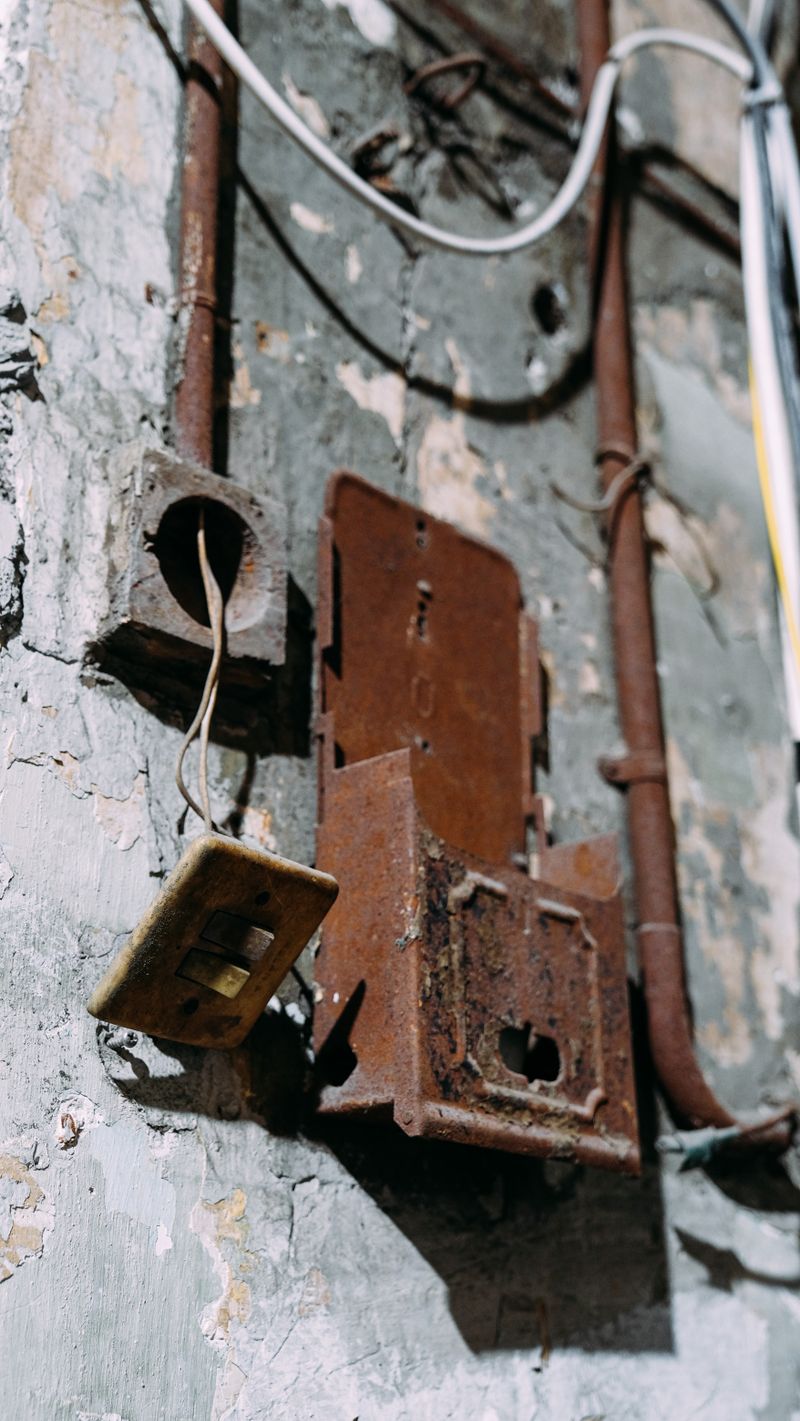
If you own a home built before 1950, there’s a real chance you have knob and tube wiring — or at least remnants of it. This guide explains what knob and tube is, why it matters today, and how to make a rational decision about what to do with it.
What Is Knob and Tube Wiring?
Knob and tube (K&T) wiring was the standard residential wiring method in North America from approximately 1880 through the 1940s. It takes its name from two components:
- Ceramic knobs: Small porcelain insulators nailed to framing members that support and separate the conductors from the wood
- Ceramic tubes: Hollow porcelain tubes threaded through drilled holes in framing, allowing wires to pass through wood without contact
The wiring itself consists of two separate conductors — a hot and a neutral — run parallel through the structure but separated by several inches. Unlike modern wiring where all conductors are bundled in a single cable, K&T runs each wire independently. There is no ground conductor in knob and tube wiring.
The conductors were insulated with rubber (and sometimes cloth braid over the rubber), which has a typical service life of 30–60 years before it becomes brittle and begins to crack.
The Core Safety Concerns
1. Aged Insulation
The original rubber insulation on K&T wiring becomes brittle with age and can crack, flake, or fall away. Bare conductors in contact with wood, insulation, or each other are fire and shock hazards.
In practical terms: K&T wiring from the 1940s is now 80+ years old. Most original insulation is well past its useful life. Intact or damaged? You can’t tell without inspection.
2. No Equipment Ground
K&T wiring predates grounded circuits. There is no third (ground) conductor. This means:
- All outlets are ungrounded (two-slot receptacles)
- Equipment that requires a ground connection (computers, some appliances) is not properly protected
- Ground fault circuit interrupters (GFCIs) can be used in place of grounded outlets in many applications — but the absence of a true ground remains a limitation
3. Buried in Insulation
This is one of the most significant problems in older homes that have been renovated. K&T wiring relies on free air circulation for heat dissipation. The conductors run exposed through open framing, and the ceramic knobs and tubes keep them away from wood. When insulation is blown or packed over knob and tube wiring (as happens during energy efficiency upgrades), the wiring loses its ability to dissipate heat — running K&T under load in contact with insulation can cause the insulation to overheat.
Code note: NEC 394.12 prohibits use of knob and tube wiring where it will be in contact with loose, rolled, or foamed-in-place insulation.
In many homes, well-intentioned attic insulation upgrades have buried K&T wiring that was previously functioning safely — creating a code violation and potentially a fire hazard.
4. DIY Modifications and Overloads
Many homes with K&T have had decades of modifications — splices made with tape rather than junction boxes, higher-rated fuses installed than the wiring supports, new circuits tapped off old K&T runs. Each of these modifications added risk. Inspecting K&T wiring means tracing it and evaluating its full history, not just the visible portions.
5. Fusing
Early K&T systems were protected by fuses, not breakers. If fuses have been replaced with over-rated fuses (using a 30A fuse where 15A is appropriate), the wiring is not protected from overload — a potentially dangerous situation. Some homeowners replaced fuses with coins or other conductors to avoid blown fuses — creating a condition with essentially no overcurrent protection.
What Knob and Tube Is NOT
To be fair, some of the concern about K&T is overstated:
K&T is not inherently dangerous. The wiring method itself — when intact, properly loaded, and in free air — functions safely. Electrical inspectors routinely find K&T in good condition in homes where it’s been lightly loaded and undisturbed.
K&T does not always need to be replaced immediately. K&T that has been properly inspected, is in good condition (intact insulation, no splices outside of junction boxes, properly fused), and is not buried in insulation can continue to function. Replacement is a matter of risk tolerance and priorities, not always an emergency.
K&T does not fail automatically with age. Age correlates with risk but isn’t deterministic. Wiring in a vacation cottage used two months per year ages differently than wiring in a full-time home with heavy loads.
Insurance Implications
Homeowner’s insurance is where knob and tube wiring most directly affects homeowners today. Many insurance companies:
- Decline to write new policies on homes with active K&T wiring
- Cancel existing policies when K&T is discovered during a claim or inspection
- Require a licensed electrician’s inspection and sign-off before coverage continues
- Charge significantly higher premiums for homes with K&T
The insurance industry’s stance has hardened over the past decade. If you’re purchasing a home with K&T, verify with your intended insurer before closing — and budget for the possibility that coverage is conditional on remediation.
How to Identify Knob and Tube Wiring
In your home:
- Check the attic (if accessible) — K&T wiring runs exposed along rafters, supported by ceramic knobs, and threads through rafters via ceramic tubes
- Check unfinished basement ceiling — similar exposed runs
- At the electrical panel — original K&T was typically connected to fuse blocks; if the panel has been updated to breakers, K&T may still exist at branch circuits
- Open an outlet box in an older section of the house — K&T runs will have two separate conductors entering the box rather than a single cable; the conductors will have cloth or rubber insulation without a ground wire
A licensed electrician or home inspector can confirm K&T presence during an inspection.
Replacement Options and Costs
Full Rewiring (Complete Replacement)
Replacing all K&T with modern NM-B cable and updated panel is the most comprehensive solution. For most single-family homes:
| Home Size | Estimated Rewiring Cost |
|---|---|
| Under 1,000 sq ft | $8,000–$15,000 |
| 1,000–1,500 sq ft | $12,000–$20,000 |
| 1,500–2,500 sq ft | $18,000–$35,000 |
| 2,500+ sq ft | $30,000–$60,000+ |
These ranges vary significantly by region, access difficulty (plaster walls vs drywall), and the condition of the existing wiring. Multi-story homes with plaster walls at the higher end; single-story homes with drywall at the lower end.
Full rewiring includes new outlets, switches, fixtures, updated panel if needed, and permits/inspections.
Partial Remediation
If full rewiring isn’t financially feasible immediately, targeted remediation addresses the highest-risk areas:
Priority 1: Areas with insulation contact. Remove insulation from K&T runs in the attic, or rewire those runs with new cable that can safely exist under insulation.
Priority 2: High-load circuits. Kitchen, bathroom, workshop, and laundry circuits are the most likely to be overloaded. Rewire these first.
Priority 3: Areas with damaged insulation. Runs where insulation is visibly cracked or missing require immediate attention.
Priority 4: Outlets in wet areas. Kitchen and bathroom K&T outlets should be replaced with properly grounded or GFCI-protected circuits.
Inspecting and Documenting Existing K&T
Before deciding on remediation scope, have a licensed electrician perform a thorough inspection. They should:
- Trace all K&T runs
- Document condition of insulation throughout
- Identify any modifications or splices
- Verify fusing (or breaker ratings) are appropriate for the wiring
- Check for insulation contact
- Provide a prioritized remediation recommendation
A written inspection report with photos is valuable documentation both for your planning and for insurance purposes.
Grounding Alternatives for K&T Outlets
Since K&T has no ground, occupied outlets must be addressed. NEC provides three compliance options for ungrounded outlet locations:
Option 1: GFCI Outlet Replace ungrounded outlets with GFCI outlets. The GFCI protects against ground faults even without a ground conductor. The outlet must be labeled “No Equipment Ground.” This is the most practical and least expensive approach for occupied homes.
Option 2: GFCI Breaker Install a GFCI breaker protecting the circuit. All outlets on that circuit are GFCI protected. Same labeling requirement.
Option 3: Run a New Ground Wire Per NEC 250.130(C), you can run a separate ground wire from the outlet box to the panel’s ground bar without replacing the full circuit. The ground wire can run a different path than the existing wiring. This provides an actual equipment ground — the preferred solution for computers and sensitive electronics.
Making the Decision
Replace K&T if:
- Insurance requires it for coverage
- You’re doing a major renovation (walls are open anyway)
- The wiring has been buried in insulation
- There are visible signs of damaged insulation
- The wiring has been modified with non-approved splices or over-fused
- You’re selling the house and want to remove it as a buyer objection
Address priorities and monitor if:
- Budget doesn’t allow full rewiring
- K&T is limited to low-load areas (bedrooms, hallways)
- Insulation is intact and not buried
- A qualified electrician confirms it’s in acceptable condition
At minimum, always:
- Have it inspected by a licensed electrician
- Verify insurance coverage is not at risk
- Replace all outlets with GFCI in kitchen, bathrooms, and anywhere required by current code
- Ensure fusing or breaker ratings match the wire capacity
Knob and tube wiring isn’t the emergency it’s sometimes portrayed as — but it deserves thoughtful evaluation and a realistic plan. The goal is to eliminate the conditions that make K&T dangerous (buried insulation, overloading, damaged insulation, improper modifications) while planning full replacement as finances allow.

Amperage HQ Editorial Team
Independent trade-focused editorial team