Electrical Panel Buzzing: When to Shut Off Power
Quick answer
A faint steady hum can come from normal magnetic equipment, but loud buzzing, crackling, heat, a burning odor, visible arcing, or flickering lights can signal a loose connection or failing breaker. Keep clear, shut off power only if you can reach the main safely, and call an electrician; call emergency services for smoke or fire.
Common questions
- Is a softly humming electrical panel normal?
- Some transformers and heavily loaded magnetic equipment hum, but a new, louder, intermittent, sizzling, or crackling sound deserves prompt professional inspection.
- Should I remove the panel cover to find the sound?
- No. Removing the dead front exposes energized service components that may remain live even when the main breaker is off.
Source note: Safety guidance checked against NFPA and CPSC electrical-hazard resources in August 2026. Diagnosis inside an energized panel is qualified-person work.
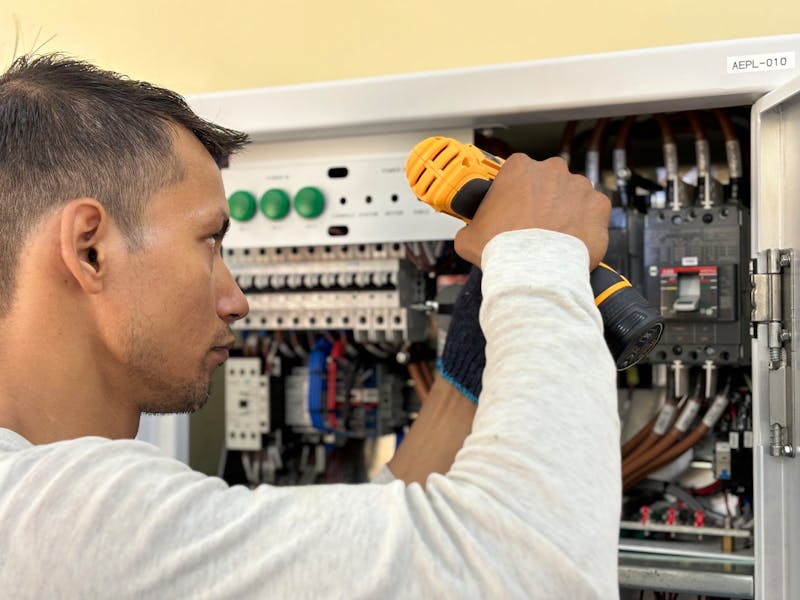
Treat loud or changing panel noise as a warning, not a repair prompt. Do not remove the cover, tighten anything, or spray a product into the panel. If there is smoke, flame, sparking, a burning-plastic odor, or the enclosure is too hot to approach, move people away and call emergency services.
Fast safety triage
| What you notice | Immediate action |
|---|---|
| Smoke, flame, repeated arcing, or strong burning odor | Leave the area and call emergency services. Do not touch the panel. |
| Loud buzzing plus heat, flicker, or repeated breaker trips | Turn off the main only if the route and handle are safe; call an electrician urgently. |
| New buzz from one breaker without heat or odor | Reduce the affected load without opening the panel and arrange prompt inspection. |
| Quiet, unchanged transformer-like hum | Monitor from outside the enclosure and mention it at the next electrical inspection. |
Water changes the decision: never touch a panel while standing on a wet surface or if water is entering the enclosure. Keep away and call the utility, emergency service, or an electrician as appropriate.
What the sound can mean
A breaker can vibrate under load, but a pronounced buzz may also come from a loose termination, damaged bus connection, failing breaker mechanism, contactor, transformer, or arcing fault. Those conditions can create heat at a small connection before an ordinary overload trip occurs. Sound alone cannot identify which component is responsible.
Note what changed without lingering near the panel: did a large appliance start, did lights dim, did a breaker trip, or did the noise begin after electrical work? A phone recording made from a safe distance can help an electrician, but do not postpone shutdown when other danger signs are present.
If it is safe to switch off power
Use the externally accessible main handle only when the enclosure looks intact, the floor is dry, and there is no smoke, arcing, or intense heat. Stand to the side rather than directly in front, keep your face away, and operate the handle once. Never remove the cover. If the handle will not move normally, stop.
After shutdown, leave branch breakers alone and arrange inspection. Do not repeatedly reset a breaker; the trip may be the only thing limiting a fault. Our breaker-tripping safety check explains what observations are useful without bypassing protection.
Information to give the electrician
- When the noise began and whether it is constant or load-dependent
- Any heat, odor, flicker, outage, trip, storm, water exposure, or recent work
- Panel brand/model from labels visible without opening it
- Which appliances were operating and whether switching one off changed the sound
- Photos of the closed enclosure and a safe-distance audio recording
Use the electrician handoff checklist to capture the details. If the panel is old or capacity is already tight, review the panel upgrade and load guide before discussing options.
Why DIY tightening is unsafe
Service conductors can remain energized upstream of the main breaker, and an incorrect tool movement can cause shock or an arc flash. Connection torque must match the equipment listing; overtightening can damage a lug, while undertightening recreates the hazard. A licensed electrician can de-energize appropriately, inspect for discoloration or damaged bus material, test loads, torque listed connections, and replace only compatible components.
Authoritative starting points include the NFPA electrical safety guidance and the CPSC home electrical safety information. Local codes, the equipment listing, and the electrician’s on-site findings control the repair.

Amperage HQ Editorial Team
Independent trade-focused editorial team