Panel Upgrades and Load Calculations
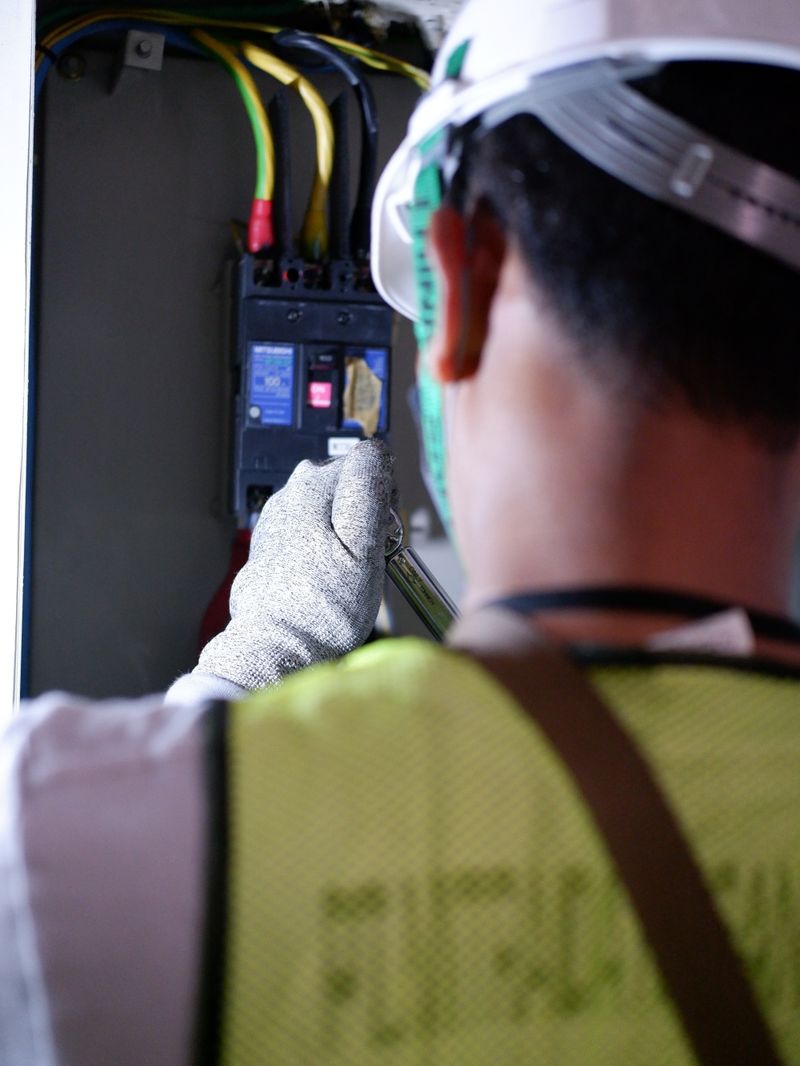
Your electrical panel is the nerve center of your home’s power system. When it can’t keep up with modern electrical demands — or when it’s simply aging out — a panel upgrade becomes a safety and capacity necessity. This guide covers how to assess your current panel, calculate your load, and understand what a proper upgrade involves.
Signs You Need a Panel Upgrade
Not every tripping breaker means you need a new panel, but certain patterns indicate it’s time to act:
- Breakers that trip frequently under normal household loads
- Double-tapped breakers — two wires connected to one breaker terminal (a code violation in most cases)
- Fuse boxes or Federal Pacific/Zinsco panels — these are obsolete or defective designs with documented safety issues
- No room for new circuits — panel is completely full
- Aluminum wiring on branch circuits from 1960s–1970s construction
- Service rated at 60 or 100 amps in a home with electric appliances, HVAC, or an EV charger
Most modern homes require a 200-amp service. Homes with large HVAC systems, electric vehicle chargers, hot tubs, or whole-home generators may need 400-amp service.
Understanding Load Calculations
A load calculation determines how much electrical capacity your home actually needs. The National Electrical Code (NEC) Article 220 defines two methods:
Standard Method (Article 220, Part III)
This method calculates the total load by adding:
- General lighting load: 3 VA per square foot of living space
- Small appliance circuits: 1,500 VA per required 20-amp kitchen circuit (minimum two)
- Laundry circuit: 1,500 VA
- Fixed appliances: nameplate ratings (water heater, dryer, dishwasher, etc.)
- HVAC: largest of heating or cooling (not both)
- EV chargers, hot tubs, ranges: full nameplate rating
Apply demand factors to general lighting (first 3,000 VA at 100%, remainder at 35%) and electric ranges over 12 kW.
Optional Method (Article 220, Part IV)
Used for single-family dwellings. It simplifies the calculation by using a flat 100% for the first 10 kVA and 40% for the remainder of general and appliance loads, then adds HVAC and fixed appliances at full value.
Example Calculation
For a 2,000 sq ft home with gas HVAC, electric range, electric water heater, and two small appliance circuits:
| Load | VA |
|---|---|
| General lighting (2,000 × 3) | 6,000 |
| Small appliance circuits (2 × 1,500) | 3,000 |
| Laundry | 1,500 |
| Electric range | 8,000 |
| Water heater | 4,500 |
| Subtotal | 23,000 |
After demand factors: first 10,000 VA at 100% + remaining 13,000 at 40% = 10,000 + 5,200 = 15,200 VA.
At 240V: 15,200 ÷ 240 = 63.3 amps. A 100-amp service technically covers this, but a 200-amp panel gives substantial headroom for future loads.
What a Panel Upgrade Involves
The Scope of Work
A full panel upgrade typically includes:
- Utility coordination — your electric utility must disconnect service at the meter before work begins
- New service entrance — the conduit, wires, and meter base from the utility connection to the panel may need upgrading
- New main breaker panel — sized to the new service amperage
- Transfer of existing circuits — each branch circuit is landed on a new breaker in the new panel
- Grounding and bonding — ground rods, main bonding jumper, and equipment grounding conductors verified or replaced
- Permit and inspection — required by code in virtually every jurisdiction
Permit and Inspection
Do not skip the permit. A panel upgrade alters your home’s service entrance, which directly affects utility liability and homeowner’s insurance. An uninspected panel upgrade can void your insurance policy and create liability if a fire occurs.
Service Entrance Wire Sizing
| Service Size | Minimum Copper Wire | Minimum Aluminum Wire |
|---|---|---|
| 100A | 4 AWG | 2 AWG |
| 200A | 2/0 AWG | 4/0 AWG |
| 400A | Two 2/0 sets | Two 4/0 sets |
Most utilities and panels use aluminum for service entrance conductors — this is acceptable and standard for this application.
Selecting a New Panel
Key considerations when choosing a replacement panel:
- Amperage rating: Match to your calculated load plus future headroom
- Number of spaces: Get more than you think you need — 40-space panels are common and fill up quickly
- Brand and parts availability: Choose mainstream brands (Square D QO, Eaton BR, Siemens PL) for long-term breaker availability
- Main breaker vs. main lug: If your new panel is the service disconnecting means, it needs a main breaker
- Listed for your application: Use indoor-rated panels indoors, outdoor-rated enclosures outside
DIY vs. Licensed Electrician
Panel upgrades require pulling a permit, coordinating with the utility, and working on service entrance conductors that carry live voltage even when your main breaker is off. In most jurisdictions:
- Homeowners may pull a permit for work on their own primary residence
- The utility controls the meter — only they can pull it or install a temporary cover
- Inspectors will verify the work before the utility restores service
Even capable DIYers often hire a licensed electrician for panel work. The service entrance conductors above the main breaker are always energized and pose a serious electrocution risk without proper training and PPE.
Information to Gather Before Calling Contractors
- Existing main breaker size and panel brand
- Number of open breaker spaces
- Major loads: HVAC, range, dryer, water heater, well pump, EV charger, hot tub, workshop tools
- Utility service type and meter location
- Photos of the panel directory, meter base, grounding electrode conductor, and service mast or lateral
- Planned future loads, not just current ones
For HVAC electrification, gather the exact equipment nameplates before calculating or quoting. The heat-pump and mini-split electrical checklist explains MCA, MOCP, disconnect, conductor-route, and contractor-scope inputs.
This preparation helps electricians perform a realistic load calculation instead of quoting only a like-for-like panel swap. It also surfaces utility-side work early, which can be the longest scheduling item.
Upgrade Red Flags
Call a licensed electrician promptly if you see warm breakers, buzzing, rust inside the panel, double-tapped breakers not listed for two conductors, scorched bus bars, or frequent trips that are not tied to a known overload. These are reliability and fire-risk symptoms, not convenience upgrades.
Photograph these conditions before the service call so the electrician can prioritize the visit accurately.
After the Upgrade
Once the new panel is inspected and service restored:
- Label every breaker clearly
- Map circuits to a panel directory
- Test AFCI and GFCI breakers using their test buttons
- Verify that all ground fault and arc fault protection requirements are met for newly landed circuits
A properly sized, well-installed panel will serve your home for 30–40 years. Invest in the right capacity now — it’s far cheaper than another upgrade in five years.
See Also
- NEC code basics — NEC Article 220 defines the load calculation methods used in this guide; understanding the code structure helps you apply them correctly
- Subpanel installation basics — if a full panel upgrade isn’t needed but you need more circuit capacity in a specific area, a subpanel may be the right solution
- Home EV charger installation — EV chargers are one of the primary reasons homes need panel upgrades; see how to assess capacity and size the circuit correctly New or worsening sound deserves its own safety decision: use the electrical-panel buzzing triage and never remove the dead front to investigate an energized noise.
Connect load calculations to major equipment decisions
These resources keep panel capacity, EV charging, backup power, permits, and safe handoff notes in one planning path.
- Electrical panel upgrade cost
Compare load-calculation results with service upgrade scope and cost factors.
- Home EV charger installation
Treat charger amperage as a load-planning question before choosing equipment.
- Whole-house generator sizing
Separate essential backup loads from normal whole-home electrical demand.
- Transfer switch installation options
Compare transfer equipment after the standby load list and service constraints are clear.
- Electrician handoff checklist
Document visible panel, load, photo, and permit notes for a qualified electrician.

Amperage HQ Editorial Team
Independent trade-focused editorial team