NEC Code Basics: What Electricians Need to Know
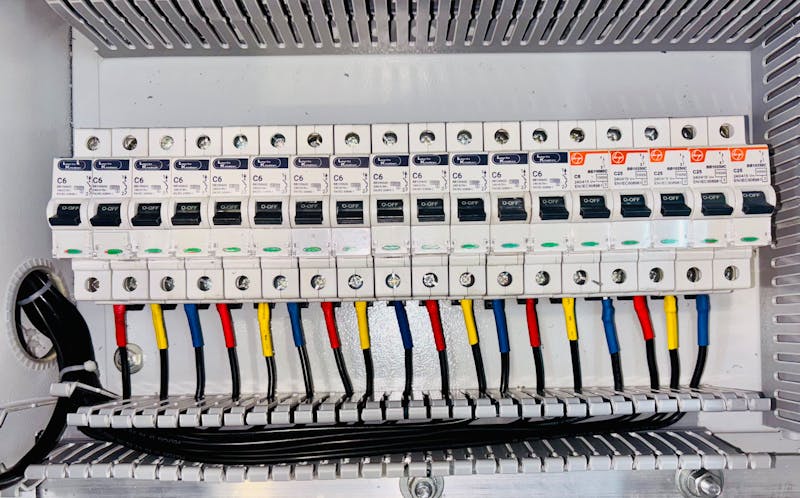
The National Electrical Code (NEC) is the foundation of safe electrical installation in the United States. Whether you’re a licensed electrician, an apprentice, or a homeowner tackling your own wiring, understanding how the NEC is structured and what it requires will help you work legally, safely, and with confidence.
What Is the NEC?
The NEC is a standard published by the National Fire Protection Association (NFPA), document number NFPA 70. It is updated on a three-year cycle — the current version at time of writing is the 2023 NEC. It is not a federal law — it is a model code that states and municipalities adopt (and sometimes amend) into their local building codes.
Important: Check which edition of the NEC your jurisdiction has adopted. Many states lag 1–2 cycles behind the current publication. Jurisdiction-specific amendments can add or relax requirements.
How the NEC Is Structured
The NEC is organized into chapters and articles:
Chapters and Their Scope
| Chapter | Scope |
|---|---|
| 1 | General (definitions, scope, fundamental rules) |
| 2 | Wiring and Protection |
| 3 | Wiring Methods and Materials |
| 4 | Equipment for General Use |
| 5 | Special Occupancies |
| 6 | Special Equipment |
| 7 | Special Conditions |
| 8 | Communications Systems |
| 9 | Tables |
| Annexes | A–J: reference material, examples, conduit fill, etc. |
Chapters 1–4 form the baseline. Chapters 5–7 modify or supplement them for specific situations. When a special rule in Chapter 5 conflicts with Chapter 1–4, Chapter 5 wins.
Key Articles for Residential Work
- Article 90: Scope and purpose of the NEC
- Article 100: Definitions — if a term appears in the NEC, look it up here first
- Article 110: Requirements for electrical installations (working clearances, connections, markings)
- Article 200: Use and identification of grounded conductors (neutral wire rules)
- Article 210: Branch circuits — the rules for standard outlet and lighting circuits
- Article 215: Feeders — circuits from panel to subpanel
- Article 220: Branch circuit, feeder, and service calculations (load calculations)
- Article 230: Services — utility connection, service entrance, disconnecting means
- Article 240: Overcurrent protection — breakers and fuses
- Article 250: Grounding and bonding — one of the most complex and important articles
- Article 300: General wiring methods
- Article 310: Conductors for general wiring — wire ampacity tables
- Article 314: Outlet, device, pull, and junction boxes
- Article 334: Non-metallic sheathed cable (NM-B, “Romex”)
- Article 406: Receptacles, cord connectors, and attachment plugs
- Article 408: Switchboards, switchgear, and panelboards
- Article 410: Luminaires (light fixtures)
- Article 422: Appliances
- Article 430: Motors — ampacity and overcurrent protection rules for motor loads
- Article 440: Air conditioning and refrigerating equipment
- Article 550: Mobile homes and manufactured housing
- Article 680: Swimming pools, fountains, and similar installations
- Article 700: Emergency systems
- Article 760: Fire alarm systems
Key Rules Every Electrician Should Know
Working Clearances (Article 110.26)
The NEC requires clear working space in front of electrical equipment:
- Depth: 36 inches minimum in front of panels and equipment (more for higher voltages)
- Width: 30 inches or the width of the equipment, whichever is greater
- Height: 6.5 feet clear from floor to ceiling
This space must be accessible and must not be used for storage. Equipment must be accessible without climbing over other equipment.
Wire Ampacity (Article 310 and Table 310.12)
Every conductor has a maximum current-carrying capacity (ampacity) that depends on:
- Conductor material (copper vs. aluminum)
- Insulation type (THHN, THWN, NM-B, etc.)
- Installation method (conduit, cable, direct burial)
- Number of conductors bundled together (derating)
- Ambient temperature
The NEC provides tables for common configurations. Derating (reducing ampacity) is required when more than three current-carrying conductors are bundled together.
Overcurrent Protection (Article 240)
Every ungrounded (hot) conductor must be protected by a breaker or fuse sized at or below the conductor’s ampacity. Standard sizes are 15A, 20A, 30A, 40A, 50A, 60A, 70A, 80A, 90A, 100A, 110A, 125A, 150A, and 200A.
The next size up rule: If a calculated load requires a non-standard breaker size, you may use the next standard size up — but only up to 800A, and only if the conductor is not part of a branch circuit for standard loads.
Box Fill (Article 314.16)
Electrical boxes must be large enough to contain all conductors, devices, and clamps without excessive crowding. The NEC defines volume allowances for each conductor size and device type:
| Item | Volume (cu in) per #14 AWG |
|---|---|
| Each conductor entering box | 2 cu in |
| Each device (switch/outlet) | 4 cu in (double) |
| All equipment grounding conductors | 2 cu in (counted as one) |
| Each cable clamp (internal) | 2 cu in (all clamps counted as one) |
That simplified table is not enough for mixed conductor sizes, device yokes, loops, support fittings, barriers, or edition-specific equipment-grounding rules. Use the electrical box-fill trade worksheet for a reproducible category-by-category calculation.
AFCI and GFCI Requirements (Articles 210.8 and 210.12)
The NEC has progressively expanded GFCI and AFCI requirements over multiple code cycles:
GFCI (Article 210.8) — required in:
- Bathrooms, garages, outdoors, crawl spaces, unfinished basements, kitchens (countertop receptacles), laundry areas, boathouses, and other wet/damp locations
AFCI (Article 210.12) — required for all 15A and 20A, 120V branch circuits in dwelling unit bedrooms (since 1999) and extended to virtually all living spaces in later editions.
Neutral in Switch Boxes (Article 404.2(C))
Since the 2011 NEC, switch boxes in single-phase dwelling units must contain a neutral conductor (not necessarily connected, just available). This provision anticipates smart switches and dimmers that need a neutral to operate.
How the NEC Is Adopted
The NEC is adopted state-by-state (and sometimes city-by-city). The process:
- NFPA publishes a new NEC edition every three years
- State legislatures or building code departments adopt it, with or without amendments
- Local jurisdictions may adopt additional amendments
- The adopted version governs all permitted electrical work in that jurisdiction
To find out which edition applies in your area, contact your local building department or state electrical licensing board. Many states list their adopted edition on their building codes website.
Using the NEC Effectively
The NEC is written in mandatory language (“shall”) and is dense with cross-references. Tips for navigating it:
- Start with the index: Find the article for your specific topic
- Read definitions first (Article 100): Many disputes about code compliance come down to terminology
- Follow cross-references: Articles routinely reference other articles — follow them
- Use the informational notes: Non-mandatory notes throughout the code explain the intent behind rules
- Get the NFPA Handbook: The Handbook version includes commentary and examples alongside each section
Knowing the NEC doesn’t just keep your work legal — it makes you a better electrician. The rules exist because real fires, injuries, and deaths revealed hazards in earlier installation practices. Understanding the “why” behind each requirement makes them easier to apply correctly.
See Also
- Wire gauge and ampacity guide — a practical reference for NEC Table 310.12 ampacity values and the sizing rules you’ll apply on every circuit
- GFCI and AFCI outlet installation — Articles 210.8 and 210.12 in practice: where to install each protection type and how to do it correctly
- Running new circuits — a project walkthrough that applies NEC requirements for circuit sizing, protection types, and panel landing

Amperage HQ Editorial Team
Independent trade-focused editorial team