Circuit Breaker Types and Replacement
Quick answer
Circuit breakers must match the panel manufacturer listing, circuit rating, conductor size, and protection type. Replacement is not a brand-mixing exercise; an incorrectly fitted breaker can create heat, arcing, and inspection problems.
Common questions
- Can any breaker that fits be used in a panel?
- No. Breakers must be listed or classified for the specific panel. A breaker that physically snaps in may still be unsafe or not code compliant.
- When should a breaker be replaced?
- Replacement may be needed for physical damage, overheating signs, nuisance trips after load problems are ruled out, or obsolete equipment. Repeated tripping should be diagnosed before replacing the breaker.
Source note: Reviewed September 2026 for panel-entry safety and breaker compatibility; local code, permits, and a qualified or licensed electrician should control diagnosis and replacement.
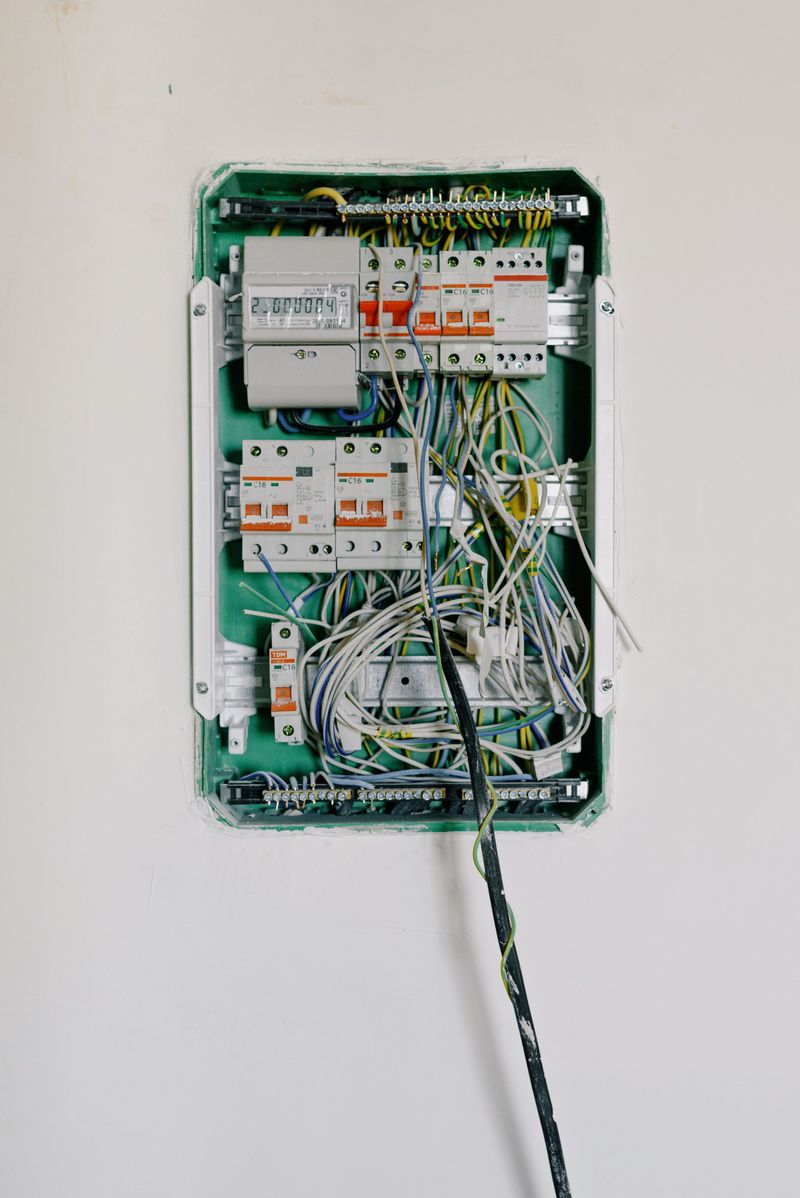
Circuit breakers are your electrical system’s first line of defense — they interrupt current flow when a circuit overloads or develops a fault. Understanding breaker types, warning signs, and compatibility helps homeowners describe a problem and helps electrical professionals choose the correct repair.
How Circuit Breakers Work
A circuit breaker is an automatic switch that trips — opens the circuit — when it detects either:
- Overload: Current exceeds the breaker’s rating for long enough to cause heat damage to wiring
- Short circuit: A sudden massive surge of current from a direct hot-to-neutral or hot-to-ground connection
Standard breakers use a bimetallic strip for thermal (overload) tripping and an electromagnet for magnetic (short circuit) tripping. When the bimetallic strip heats under sustained overload, it bends and releases the trip mechanism. A short circuit’s magnetic force does the same thing nearly instantaneously.
Types of Circuit Breakers
Standard Single-Pole Breaker
- Controls a 120V circuit
- Rated 15A or 20A for most branch circuits (higher ratings for appliances)
- Takes one slot in the panel
- The most common type in residential panels
Standard Double-Pole Breaker
- Controls a 240V circuit by connecting to two hot legs of the panel
- Takes two adjacent slots
- Used for electric ranges, dryers, HVAC, water heaters, and subpanels
- Available in ratings from 15A to 200A+
GFCI Breaker
- Provides ground fault protection for the entire circuit
- Has a white pigtail that connects to the neutral bar
- Used when multiple outlets in a wet area need GFCI protection
- More expensive than a standard breaker, but protects everything downstream
AFCI Breaker
- Detects arc faults — the electrical signature of dangerous sparking
- Commonly required by adopted electrical codes for many 15A and 20A, 120V circuits in living spaces
- Also has a white pigtail connected to the neutral bar
- Has a TEST button on its face
Dual-Function AFCI/GFCI Breaker
- Provides both arc fault and ground fault protection in a single breaker
- Used where the adopted code requires both protections, which can include kitchen or laundry circuits
- More expensive but simplest solution for compliance
Tandem Breaker (Half-Size)
- Two breakers in one slot — allows adding circuits to a full panel without upgrading
- Only works in panels listed for tandem breakers (check your panel’s directory)
- Available as standard or AFCI/GFCI types
- Not all panels accept tandems — using a tandem in a non-listed slot is a code violation
HVAC and Large Appliance Breakers
- Single or double-pole breakers rated 30A–60A for large loads
- Some are designed for time-delay operation to handle motor starting surges
- Motor-rated breakers should be used for HVAC compressors and large motors
Identifying a Bad Breaker
A breaker can fail, but repeated tripping can also point to an overload, a short circuit, a ground fault, an arc fault, damaged wiring, or connected equipment. From the closed panel front, warning signs include:
- Trips repeatedly under normal load — the load may be too high, or the breaker is worn
- Won’t reset — stays in the middle “tripped” position after pushing to OFF then ON
- Unusual heat, a burning odor, buzzing, or scorch marks around the breaker face or panel exterior
- Breaker handle moves freely with no resistance — the mechanism may be damaged
- Circuit remains dead after a normal reset — the cause requires diagnosis rather than repeated resetting
A breaker that appears stuck may simply need the full OFF-to-ON reset motion, while an immediate repeat trip can indicate a continuing fault. Use the circuit breaker will not reset guide before treating replacement as the next step. If there is smoke, active arcing, a strong burning smell, or visible damage, stay clear and contact emergency services or an emergency electrician as conditions require.
Do not remove the panel cover or insert meter probes into the panel to test a breaker. A qualified electrician should determine whether the breaker, the connected circuit, or the load is causing the symptom.
How Circuit Breaker Replacement Should Be Handled
Breaker replacement requires panel entry, conductor handling, and work next to energized equipment. Even when the main breaker is off, the incoming service conductors and terminals can remain energized. Turning off the main does not make the entire enclosure safe.
Do not remove the dead-front cover, test inside the panel, touch or inspect bus components, disconnect conductors, or snap a breaker on or off the bus. Panel diagnosis and breaker replacement should be performed by a qualified electrician, or a licensed electrician where local rules require one, using the applicable shock, arc-flash, lockout, and verification procedures.
Compatibility Still Matters
Brand compatibility matters. Breakers from different manufacturers are generally not interchangeable — they may physically fit but not make proper contact with the bus bar, creating a fire risk. Square D QO, Eaton BR, Siemens, and Cutler-Hammer all have specific compatible breaker lines. Use only listed breakers for your panel.
The electrician should match the replacement to the panel label and manufacturer instructions, not appearance alone. Compatibility includes:
- Panel make, model, and the breaker’s listed or classified use
- Pole count, voltage, and ampere rating
- Conductor material and size
- Required standard, GFCI, AFCI, or dual-function protection
- Available panel position and any limits on tandem breakers
Before replacing anything, the electrician should diagnose why the breaker tripped or stopped supplying power, inspect the relevant connection and panel condition, and correct any underlying circuit defect. The completed work should follow manufacturer torque and test instructions plus local permit and inspection requirements.
What Homeowners Can Do Without Panel Entry
- Record what was running and what happened before the trip.
- Unplug or switch off connected loads when it is safe to do so.
- Read the panel and breaker labels visible without removing the cover.
- Photograph the closed panel front and note any heat, odor, noise, or discoloration without touching a suspect area.
- Ask the electrician to identify the root cause, exact replacement, permit needs, and any damage found.
A properly functioning breaker panel is non-negotiable for electrical safety. When in doubt, stop resetting the breaker and have the condition diagnosed; do not assume that replacing the breaker will correct the fault.
See Also
- Circuit breaker replacement cost — compare diagnosis, branch-breaker, specialty-breaker, main-breaker, and panel scopes before approving a quote
- Panel directory and circuit-labeling checklist — map branch circuits from exterior controls and create durable, specific labels without panel entry
- GFCI and AFCI outlet installation — a deeper look at how AFCI and GFCI breakers work and where the NEC requires each type
- Panel upgrades and load calculations — if your panel itself is the problem, this guide covers when to upgrade and what the process involves
- NEC code basics — understand the code requirements that govern breaker sizing, overcurrent protection, and AFCI/GFCI placement For a common source of confusion, compare a tandem breaker with a double-pole breaker before choosing any replacement; panel listing and exact breaker compatibility control.
Connect breaker type to safe trip documentation
These resources help separate breaker labels, trip patterns, GFCI/AFCI behavior, and electrician handoff notes.
- Breaker and GFCI trip safety decision tree
Screen stop conditions and record safe observations before another reset.
- Electrician handoff checklist
Prepare broader panel, load, photo, and permit notes for a licensed electrician.
- GFCI and AFCI protection
Review why different protective devices trip for different reasons.

Amperage HQ Editorial Team
Independent trade-focused editorial team