Electrical Safety: Arc Flash, Grounding, and Lockout/Tagout
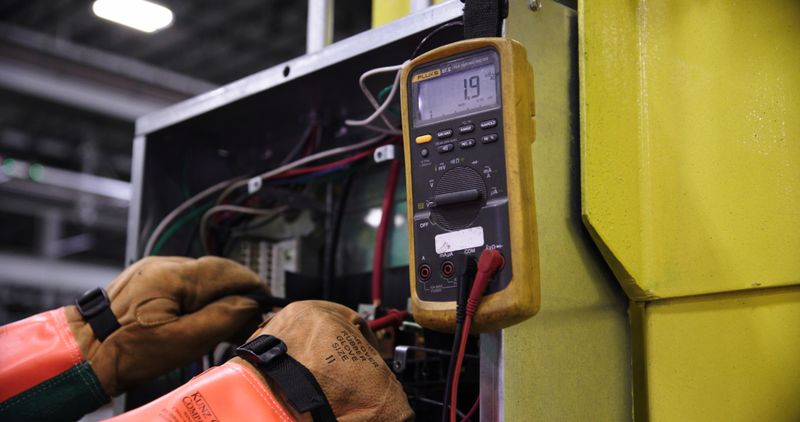
Electricity kills quickly and without warning. Most electrical injuries and fatalities are preventable with proper hazard awareness, grounding practices, and energy control procedures. Whether you’re a licensed electrician working commercial equipment or a homeowner tackling a panel job, understanding these three pillars of electrical safety can make the difference between finishing a job and not going home.
Arc Flash: The Invisible Killer
What Is Arc Flash?
An arc flash is an explosive release of energy caused by an electrical fault — when current jumps through air between two conductors or between a conductor and ground. Temperatures at the arc can reach 35,000°F (four times the surface temperature of the sun), vaporizing copper conductors and creating a pressure wave that can throw workers across a room.
Arc flash incidents cause:
- Severe burns (often third-degree burns over large body areas)
- Blindness from the intense UV light
- Blast injuries from the pressure wave
- Hearing damage
- Death
The energy released in an arc flash is measured in calories per square meter (cal/cm²). An incident energy of just 1.2 cal/cm² can cause a second-degree burn. Industrial switchgear can produce incident energies of 40+ cal/cm².
Arc Flash Hazard Categories (NFPA 70E)
NFPA 70E, the standard for electrical safety in the workplace, defines arc flash PPE categories based on incident energy:
| PPE Category | Minimum Arc Rating | Typical Equipment |
|---|---|---|
| 1 | 4 cal/cm² | Small panels, low-voltage equipment |
| 2 | 8 cal/cm² | 480V distribution, motor control centers |
| 3 | 25 cal/cm² | Switchgear, larger distribution |
| 4 | 40 cal/cm² | High-capacity switchgear |
Required PPE at each category includes arc-rated clothing, face shield, gloves, and footwear appropriate to the hazard level.
Reducing Arc Flash Risk
- De-energize before working: The only way to eliminate arc flash risk is to work on de-energized equipment verified dead with a properly rated meter
- Establish an electrically safe work condition: Lock out, test, and verify before touching
- Wear PPE appropriate to the hazard: Don’t work on energized equipment above Category 1 without proper arc-rated PPE
- Maintain safe approach distances: Know the arc flash boundary and restricted/limited approach boundaries for the voltage you’re working near
- Use insulated tools: Rated for the voltage being worked near
For Residential Electricians
Residential voltage levels (120/240V) produce lower arc flash energies, but the hazard is still real — especially when working inside a live service panel. At minimum:
- Use a non-contact voltage tester before touching anything
- Wear safety glasses — not fashion glasses, actual ANSI Z87.1 rated eyewear
- Never work alone on live service equipment
- Keep one hand in your pocket when probing energized terminals (limits current path through your chest)
Grounding: The Foundation of Electrical Safety
Why Grounding Matters
Grounding serves two separate and distinct safety functions:
- Equipment grounding: Provides a low-impedance return path for fault current, so a breaker trips quickly when a fault occurs — keeping fault current off equipment enclosures and metal surfaces
- System grounding: Establishes a voltage reference point (the neutral-to-earth connection at the service entrance) that limits voltages imposed on the system from lightning, utility equipment, or accidental contact with higher-voltage lines
Confusing these two functions — or eliminating either one — creates serious hazards.
Equipment Grounding Conductors (EGC)
The green or bare wire in your branch circuit cables is the equipment grounding conductor. It connects all metal enclosures, outlets, and devices back to the panel’s ground bar, which connects to the neutral bar (main bonding jumper) at the service entrance and to the earth (ground rods).
When a hot conductor contacts a metal enclosure, fault current flows through the EGC back to the panel, causing the breaker to trip. Without the EGC, that fault current would seek a path through anyone touching the equipment — making the equipment lethally energized.
Ground Rods and Grounding Electrodes
NEC Article 250 requires a grounding electrode system at every service entrance. This typically includes:
- Two ground rods driven at least 6 feet into the earth, 6+ feet apart, each at least 8 feet long
- Water pipe electrode (if metallic water pipe is available and makes continuous underground contact for at least 10 feet)
- Concrete-encased electrode (Ufer ground): Bare #4 AWG or larger copper, 20+ feet in footing concrete — highly effective
- Plate electrode: At least 2 square feet of 1/4” iron or 0.06” copper buried at least 30 inches
The grounding electrode conductor (GEC) connects the neutral/ground bar at the panel to this electrode system. It does not carry fault current during normal operation — its purpose is to bond the system to earth reference.
Common Grounding Mistakes
- Bootleg ground (false ground): Connecting the ground pin of an outlet to the neutral terminal — creates a ground fault hazard
- Missing EGC on extended circuits: Installing new outlets on old 2-wire circuits without a ground
- Broken ground rod conductors: Physical damage from lawnmowers, etc., defeats the electrode connection
- Neutral-to-ground connections downstream of the service: Only make the neutral-ground bond at the service entrance or first means of disconnect — downstream bonding creates parallel neutral paths that put current on the ground system
Lockout/Tagout (LOTO): Controlling Hazardous Energy
What Is LOTO?
Lockout/Tagout (LOTO) is an energy control procedure required by OSHA (29 CFR 1910.147) that protects workers from the unexpected energization of equipment during maintenance or service. The goal: ensure that all energy sources are isolated and cannot be re-energized while someone is working on or near the equipment.
The Six-Step LOTO Procedure
-
Notify: Inform all affected employees that LOTO is being applied and why
-
Identify all energy sources: Electrical disconnects, but also pneumatic, hydraulic, mechanical, thermal, and stored energy (capacitors, springs, gravity)
-
Isolate the equipment: Turn off all disconnects, circuit breakers, and switches for the equipment
-
Apply lockout devices: Install a physical lock on each energy isolation point. Each authorized worker applies their own personal lock — the equipment cannot be energized until every lock is removed
-
Apply tagout devices: If lockout is not physically possible (some older equipment), apply a tag that clearly warns against energization. Tags alone provide less protection than locks
-
Verify isolation: Test with a properly rated meter or tester to confirm the equipment is de-energized. Check all poles and all phases. Look for stored energy (discharge capacitors, block suspended loads)
Restoring Equipment to Service
Before removing LOTO devices:
- Ensure all tools, materials, and personnel are clear of the equipment
- Remove LOTO devices only by the employee who applied them (or their authorized representative, following a documented transfer procedure)
- Notify all affected employees before restoring energy
LOTO for Residential Work
OSHA LOTO standards technically apply to workplaces, not homeowners. However, the underlying principle — verify isolation before touching, lock it out when possible — is universal best practice for anyone working on electrical equipment, regardless of setting.
At minimum for residential electrical work:
- Turn off the breaker
- Tape the breaker in the OFF position with a piece of tape labeled with your name
- Test the circuit dead before touching wires
- If multiple people are working in a home, communicate clearly about which circuits are off-limits
These habits, developed early, become automatic — and they are what separate the electricians who work safely their entire careers from the ones who get hurt.
See Also
- NEC code basics — the code framework that underpins grounding requirements, working clearances, and overcurrent protection
- Panel upgrades and load calculations — panel work is one of the highest-risk residential tasks; understand what’s involved before opening a service panel
- Wire gauge and ampacity guide — properly sized conductors are a key element of electrical safety; undersized wire overheats and creates fire hazards

Amperage HQ Editorial Team
Independent trade-focused editorial team