Hardwired smoke detector wiring and interconnection
Quick answer
A hardwired smoke alarm normally uses constant AC power, a backup battery, and an interconnect path that makes compatible alarms sound together. Replace by exact listed compatibility and manufacturer instructions, not connector shape or wire color, and have fixed wiring handled under local permit and licensing rules.
Common questions
- Can different brands of hardwired smoke alarms be interconnected?
- Only when the manufacturer documentation specifically lists the models as compatible. A matching plug or interconnect wire does not prove that mixed devices are listed to operate together.
- Will hardwired smoke alarms work during an outage?
- Models with an installed and functioning backup battery can continue operating during loss of AC power. The exact battery, indicator, and end-of-life behavior are model-specific.
Source note: Life-safety guidance reviewed in August 2026 against NFPA smoke-alarm material and current Kidde interconnection guidance. Local fire, building, and electrical requirements and each alarm's manual control.
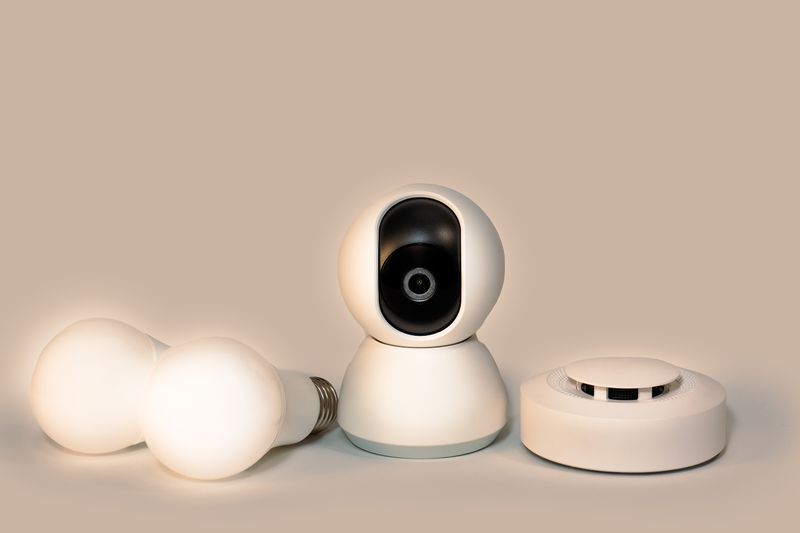
Hardwired smoke detectors are a life-safety system, not a row of interchangeable ceiling devices. The replacement must match the home’s power arrangement, backup-power requirement, interconnection method, compatible model list, and locally adopted fire and building rules.
If one alarm is chirping or past its replacement date, inventory the whole interconnected group before buying a single unit. A new alarm that attaches to an old plug can still be electrically or functionally incompatible.
What hardwired and interconnected mean
A typical residential hardwired alarm has constant branch-circuit power and battery backup. A separate interconnect signal may cause every compatible alarm on the network to sound when one detects smoke or carbon monoxide.
Those functions are distinct:
| Function | What it does | What to verify |
|---|---|---|
| AC supply | Powers the alarm during normal operation | Circuit, voltage, unswitched supply, and model rating |
| Backup power | Maintains protection during an outage | Replaceable or sealed battery type and activation state |
| Interconnect | Sends an alarm signal to other units | Listed compatible models, device limit, and wiring or wireless method |
| Local sensing | Detects smoke, heat, or CO at that location | Device type, listed use, placement, and end-of-life date |
| Audible/visual notification | Warns occupants throughout the home | Sound pattern, voice/strobe needs, sleeping-area audibility, and accessibility requirements |
NFPA’s smoke-alarm installation material describes hardwired systems as AC-powered and commonly interconnected, with battery backup on most models. It also recommends qualified-contractor replacement of hardwired units.
The three-conductor pattern is not universal permission
Many North American residential systems use one conductor for ungrounded power, one neutral, and one interconnect signal. Black, white, and red or orange are common conventions, but wire color, harness shape, and mounting-ring fit are not universal compatibility rules.
Do not use a generic color diagram as installation instructions. The electrician should verify the supply circuit, identify every conductor, confirm box and grounding conditions, and follow the manual for the exact catalog number. Never connect the interconnect conductor to line voltage.
If the alarm circuit is missing or inaccurately labeled, update the panel directory checklist as part of the project. Do not deliberately disable occupied-home detection for extended tracing.
Interconnection compatibility checklist
Use the current manual for both the existing network and proposed replacement. Record:
- Manufacturer, model, and date code of every interconnected alarm
- Smoke-only, CO-only, heat, combination, relay, strobe, or other accessory type
- Hardwire, wireless, or hybrid interconnection method
- Maximum number and permitted mix of interconnected devices
- Approved adapter or quick-connect harness, if any
- Required circuit voltage and backup-battery arrangement
- Required post-installation test for local and whole-network operation
Kidde’s interconnection compatibility guidance says its models are evaluated only with specifically compatible devices listed in the user guide. Its warning is practical across brands: do not assume an unlisted mixed system will transmit or synchronize alarm signals correctly.
Kidde also publishes a model-specific compatible-products list. Treat that list as evidence for the models it names, not as a general rule for every old Firex, Kidde, First Alert, BRK, heat, CO, relay, or smart alarm.
Replace by system, not by appearance
Check the manufacture and replace-by dates
NFPA materials generally call for smoke-alarm replacement at 10 years, while combination and CO product life can differ. The printed date, end-of-life signal, recall status, and manufacturer instructions decide when a particular unit is due.
If several interconnected alarms were installed together, they may age out together. Replacing the full group with a documented compatible set can be safer and easier to validate than creating a mixed network one device at a time.
Confirm the required detection coverage
NFPA guidance places smoke alarms inside every bedroom, outside each sleeping area, and on every level, including the basement. Local rules may add requirements for additions, major renovations, rentals, accessibility, or combination smoke/CO protection.
This is not a generic buying exercise. Build a room-by-room inventory, compare it with the locally adopted rules, and use the home-buyer electrical inspection checklist to capture missing, damaged, painted-over, or inaccessible alarms.
Match the exact listed device family
Verify sensing type, power source, interconnect family, backup battery, audible pattern, smart features, and any required strobe or low-frequency notification. An adapter listed for a specific conversion can simplify replacement; an improvised splice or third-party plug cannot establish listing.
Search the CPSC recall database and manufacturer support pages for every model being retained. Do not remove an alarm affected by a recall until the recall remedy tells you how to maintain protection.
Safe replacement boundary
Homeowners can read labels, record dates, test alarms using their buttons, and replace accessible batteries as the manual directs. Stop and use a qualified electrician or alarm contractor for:
- Opening a hardwired junction box or changing fixed conductors
- Unidentified, damaged, aluminum, cloth-insulated, or scorched wiring
- Missing constant power or a switched alarm circuit
- Adding locations, extending interconnect wiring, or changing circuits
- Mixed voltages, low-voltage fire-alarm panels, relays, security integration, or monitored systems
- Permit, rental, accessibility, or local fire-code work
Turn off the correct circuit before any manufacturer-authorized removal, and verify de-energization using appropriate procedures. Backup batteries mean a unit may still sound after AC power is off. The electrical permit guide explains why life-safety wiring often needs local review.
Commission the entire network
Replacing an alarm is not complete when its power light comes on. Follow the manual’s test procedure and confirm all required outcomes:
- Each alarm is firmly mounted, activated, and free of packing material or dust.
- AC and backup-power indicators show the documented normal state.
- The local test button produces the correct audible and visual response.
- Every required interconnected alarm sounds from a test initiated at each location.
- Smoke and CO signals produce the correct distinguishable patterns where combination devices are used.
- Smart notifications, relays, strobes, or monitored features respond only as their instructions specify.
- The circuit directory, installation date, models, and replacement dates are recorded.
NFPA advises testing smoke alarms monthly; use the manufacturer procedure if it is more specific. Test after installation and again after any circuit work, battery change, outage, renovation dust, or device replacement.
Prepare the replacement handoff
Photograph each label without sharing alarm account credentials, sketch the alarm locations, list every model and date, and note which units sound during a test. Add permit and accessibility questions to the electrician handoff checklist.
The goal is not merely to power a new detector. It is to leave a fully compatible, interconnected, tested alarm system that warns everyone in the home.

Amperage HQ Editorial Team
Independent trade-focused editorial team