Electrical panel directory and circuit-labeling checklist
Quick answer
Build a panel directory by switching one safely accessible, clearly identified branch breaker at a time and recording every light, receptacle, and fixed load that turns off. Use specific durable labels, leave linked handles and unknown circuits alone, and ask an electrician to resolve anything that requires cover removal or electrical testing.
Common questions
- What should a breaker label say?
- Use specific locations and loads such as Kitchen counter receptacles, north/east walls or Bedroom 2 lights and receptacles. Avoid vague labels such as plugs, lights, general, or bedroom.
- Do I need to remove the panel cover to label circuits?
- No. A homeowner labeling workflow uses only exterior breaker handles and the devices that lose power. Panel-entry, conductor tracing, and energized testing belong to qualified people.
Source note: Labeling guidance checked in August 2026 against OSHA circuit-identification language and common residential directory practice. OSHA applies to workplaces; residential requirements come from the locally adopted electrical code and AHJ.
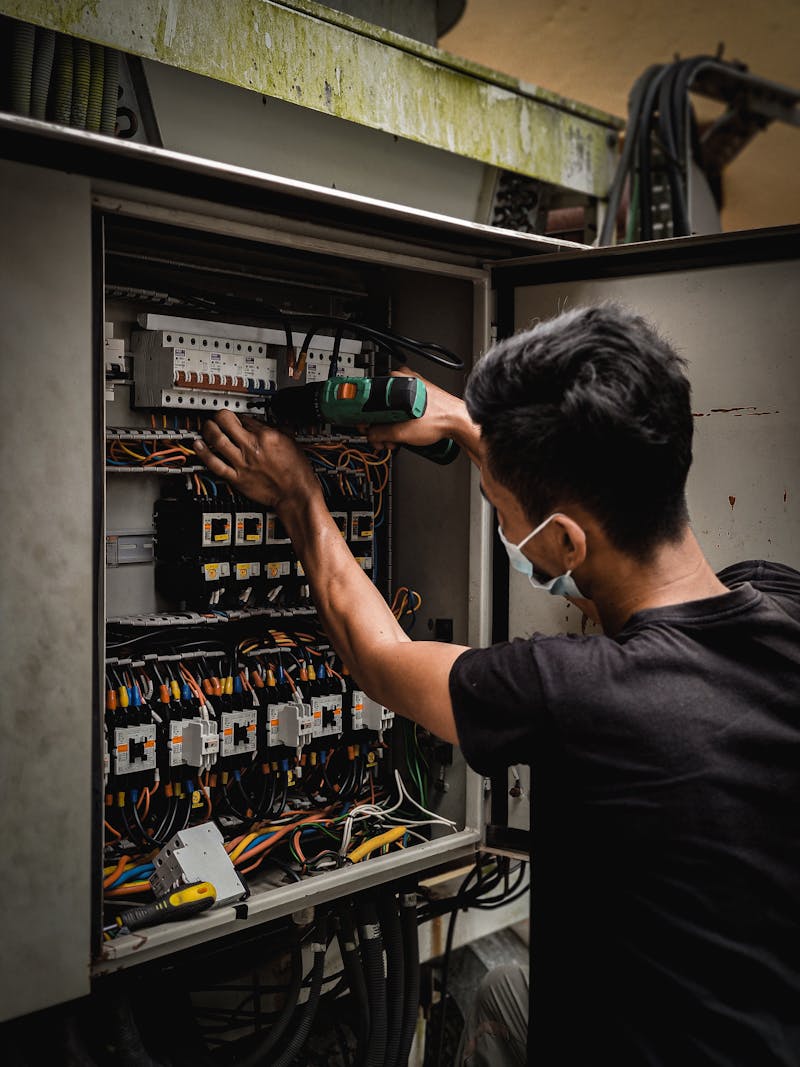
A useful electrical panel directory tells someone exactly what will lose power before they touch a breaker. Labels such as “plugs,” “lights,” “general,” or “bedroom” are too vague. A good entry names the room or area, load type, and fixed equipment in language another person can understand.
You can map many circuits without opening the panel. Work from ordinary switches, lamps, and plug-in indicators while a helper records results. Leave panel-entry, conductor tracing, and ambiguous multiwire circuits to a licensed electrician.
Stop before you start when conditions are unsafe
Do not operate breakers when the panel or floor is wet, the cover is damaged, or you notice heat, burning odor, buzzing, crackling, corrosion, or discoloration. Do not remove screws or the dead front.
Call an electrician promptly for a warm or noisy panel, loose breaker, damaged enclosure, missing blanks, repeated trip, doubled conductors where not permitted, or evidence of water. Follow our panel buzzing safety guide for sound-related stop conditions.
Gather the labeling kit
- A printed floor plan or simple room sketch
- The existing directory copied or photographed
- Pencil and a final permanent label or typed directory
- Painter’s tape or removable numbered tags for devices
- Plug-in lamps or simple outlet indicators
- Phones or two-way radios for a two-person team
- Appliance and equipment list
- Flashlights that are not on the circuits being mapped
A plug-in tester can show when one receptacle loses power, but it does not validate all wiring or grounding. This project maps loads to handles; it is not an electrical inspection.
Before switching anything off
Schedule the work with everyone in the building. Safely shut down computers, network storage, medical or accessibility equipment, security systems, aquariums, pumps, and sensitive processes. Confirm that refrigerators, freezers, HVAC controls, and other automatic loads can tolerate the planned interruption.
Identify breakers with linked handles, two-pole breakers, generator or transfer equipment, solar, batteries, EV charging, and life-safety systems from exterior labels only. Do not remove handle ties or operate poles separately. If you do not understand the equipment, put it on the electrician list.
Circuit-labeling workflow
1. Number the directory positions
Use the numbers embossed or printed by the panel manufacturer. Do not invent a top-to-bottom numbering scheme that conflicts with the panel. Copy the current entries before changing them so you preserve clues for disputed circuits.
2. Make a baseline load map
Turn on fixed lights and place plug-in lamps or indicators at representative receptacles. Include garage, exterior, attic, basement, crawl-space, hallway, closet, and utility-area locations that are easy to forget.
List hardwired loads such as disposal, dishwasher, microwave, furnace, air handler, water heater, range, dryer, well pump, sump pump, smoke alarms, doorbell transformer, and ventilation equipment. Do not force equipment to run just to identify it.
For life-safety circuits, record alarm models and interconnection without disabling the system for extended tracing. The hardwired smoke detector checklist explains the compatibility and whole-network test that should follow replacement.
3. Work one branch breaker at a time
With the panel closed and area normal, switch off one ordinary branch breaker. The helper walks the property and records every device that lost power. Confirm lights, selected receptacles, and fixed equipment indicators without removing covers.
Switch the breaker back on after recording, then verify that expected devices return normally. If it trips, buzzes, feels loose, or will not operate normally, stop and leave it off for an electrician.
4. Describe the whole circuit
Do not label from the first light that goes out. A circuit may cross rooms or serve an unexpected outdoor receptacle. Test the entire floor plan before finalizing the entry.
Use directions or wall names when a room has several circuits:
- Kitchen counter receptacles — north/east walls
- Bedroom 2 — lights and west-wall receptacles
- Garage receptacles + exterior front outlet
- Laundry washer receptacle
- Range — 240 V
5. Flag unknowns instead of guessing
If switching a breaker produces no obvious change, mark it Unknown — electrician to trace with the date. It could serve an attic fan, outdoor load, disconnected circuit, alarm, transformer, or future equipment. “Spare” should be used only after qualified verification that no load is connected.
6. Transfer notes to a durable directory
Use the panel’s directory card or a durable typed sheet secured in the intended holder. Keep handwriting legible and avoid covering ratings, warnings, model data, or manufacturer labels. Add the mapping date and keep the detailed room map near—not inside energized space beyond its intended document holder—the panel.
Better and worse label examples
| Avoid | Use instead |
|---|---|
| Plugs | Living room receptacles — north and west walls |
| Lights | Upstairs hall + stair lights |
| Kitchen | Dishwasher + disposal |
| Bedroom | Bedroom 1 lights/receptacles |
| Garage | Garage door opener + ceiling receptacles |
| Misc. | Unknown — electrician trace needed, 2026-08-05 |
Specific labels reduce wrong-circuit shutdowns during maintenance and help responders or contractors communicate. In workplaces, OSHA 1910.303(f) requires service, feeder, and branch circuits to be legibly and durably marked at the disconnect or overcurrent device unless purpose is evident. OSHA is not the residential code; homeowners should follow the directory provisions in their locally adopted electrical code and AHJ instructions.
Quality-control pass
After mapping, verify the directory in both directions:
- Pick a breaker entry and confirm that the described area loses power.
- Pick a room or fixed load and confirm that the floor-plan note points to the correct breaker.
- Check that two-pole and tied-handle circuits have one unambiguous description.
- Confirm that GFCI-protected downstream locations are noted on the room map where useful.
- Compare critical and automatic loads with the appliance list.
- Keep old notes only when they remain accurate; strike through or replace misleading entries cleanly.
The electrical inspection checklist can help you record panel age, visible condition, and questions separately from the directory.
Electrician handoff list
Ask a licensed electrician to resolve:
- Breakers that control no identified load
- One device that appears energized from more than one breaker
- Linked handles, shared-neutral circuits, or generator equipment you cannot confidently identify
- Missing or incorrect breaker compatibility information
- Tripping, loose, hot, noisy, damaged, or corroded equipment
- Circuits that require opening a box or panel to trace
- Directory entries that conflict with additions or prior renovations
Bring the floor plan, old and new directory, unknown-circuit list, and photos of exterior labels. The electrician handoff checklist provides a single place for these notes. If the panel is crowded or future loads are planned, review the panel capacity guide before the visit.
Keep the directory current
Update labels whenever a circuit is extended, split, repurposed, or disconnected. Make directory review part of permitted electrical work and home-sale documentation. A dated, specific panel map turns a frustrating shutdown puzzle into a reliable safety tool—without opening energized equipment.
Keep the panel map tied to safe planning
These resources connect directory work with breaker identification, visible inspection, panel capacity, and qualified-person handoff.
- Circuit breaker types
Recognize common breaker functions and why listed compatibility matters.
- Visible electrical inspection checklist
Record panel age, condition, and unanswered questions separately from the directory.
- Panel capacity and load calculations
Use the completed circuit map as better input for future load planning.
- Electrician handoff checklist
Organize unknown circuits, linked handles, symptoms, photos, and prior-work notes.

Amperage HQ Editorial Team
Independent trade-focused editorial team