Outlet Sparks When Plugging In: Safety Decision Guide
Quick answer
A tiny, momentary flash exactly as a sound plug makes contact can come from inrush current, but a large, repeated, noisy, hot, or lingering spark is unsafe. Stop using the outlet or appliance, switch off the circuit if safe, and arrange qualified inspection.
Common questions
- Is a small spark when plugging something in normal?
- A very small, split-second flash can occur when an energized appliance or power supply draws inrush current as the blades make contact. It does not prove the outlet is safe. Repeated, large, noisy, hot, or lingering sparks require shutdown and inspection.
- Should I test a sparking outlet with another appliance?
- No. Repeating the event can worsen damaged contacts or wiring. Stop using the outlet, turn off the circuit if it is safe to approach, and give an electrician the observations you already have.
Source note: Safety guidance checked in August 2026 against ESFI and CPSC materials. Diagnosis inside an outlet or energized panel is qualified electrical work.
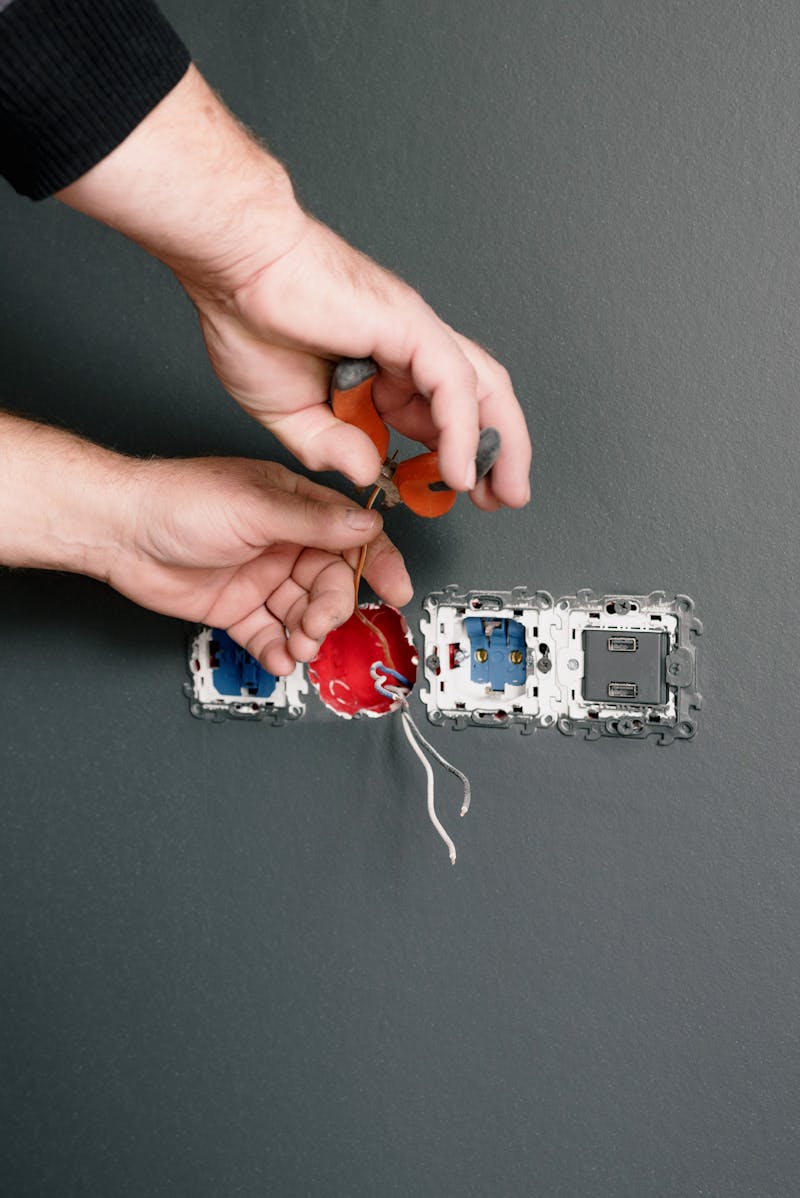
If an outlet throws more than a tiny, split-second flash as a plug first makes contact, stop using it. A large spark, repeated sparking, a crack or pop, visible arcing after the plug is seated, heat, odor, discoloration, looseness, or a breaker trip calls for prompt electrical inspection.
A pinpoint flash can sometimes happen when a switched-on appliance or electronic power supply draws inrush current at the instant of connection. That possibility is not a DIY diagnosis and does not make every spark harmless. The safest decision depends on the spark, the receptacle, the plug, and whether the symptom follows one appliance.
Immediate safety decision
- Move away for smoke, flame, sustained arcing, or a strong burning odor. Call emergency services and do not use water on energized equipment.
- Do not push the plug farther in. If it is already seated and the device can be switched off without touching a hot or damaged area, switch it off.
- Unplug only when the plug and receptacle are cool, intact, and no longer arcing. Grip the plug body, never the cord. Otherwise leave it alone.
- Switch off the labeled branch breaker if the panel is safe to approach. Do not remove either cover.
- Keep the outlet out of service. Do not reproduce the spark with another appliance, tester, adapter, or extension cord.
Use the warm or hot outlet checklist if the faceplate, plug, or wall is warmer than its surroundings. Heat plus sparking is an escalation signal, not a reason to wait and watch.
What the spark pattern may indicate
| What you observe | Possible direction, not a diagnosis | Best next action |
|---|---|---|
| Tiny flash only as a switched-on device first touches | Inrush into a motor, transformer, lamp driver, or power-supply capacitor | Switch the device off before connecting when its instructions allow; monitor without repeating a suspicious event |
| Spark follows one appliance at different sound outlets | Damaged plug, cord, internal switch, or appliance power supply | Unplug and retire the appliance until repaired or replaced |
| Spark occurs with different plugs at one outlet | Worn contact tension, damaged receptacle, loose connection, or contamination | Turn off the circuit and arrange receptacle/circuit inspection |
| Plug sags, slips, or will not seat fully | Worn contacts, bent blades, obstruction, mismatched plug, or damaged shutters | Stop using both items; do not bend blades or defeat tamper-resistant shutters |
| Pop, buzzing, heat, scorch mark, or breaker trip | Arcing fault, short circuit, failing connection, or equipment fault | Leave the circuit off and call a licensed electrician promptly |
| Arcing continues after the plug is fully inserted | Active fault at the plug, receptacle, or connected wiring | Treat as urgent; do not touch or reuse the equipment |
The breaker trip decision path can help document what happened if the protective device opened. Resetting repeatedly is not troubleshooting.
Four places a fault can begin
1. Receptacle contact wear
Internal contacts should grip the plug blades firmly. Repeated use, damage, overheating, or poor-quality prior work can reduce that grip. A loose interface creates resistance and can arc under load even when the circuit is not overloaded.
Replacing only the faceplate does nothing for damaged contacts. An electrician may need to inspect the receptacle, terminations, conductor insulation, box, and upstream or downstream connections.
2. Plug or cord damage
Look without touching for bent, blackened, pitted, loose, or partly detached blades; cracks at the plug body; crushed insulation; or a cord pulled away from its strain relief. Retire damaged equipment. Tape is not a safe repair for a damaged molded plug or cord.
Never remove a grounding pin or use an adapter to force a mismatch. The two-prong outlet upgrade guide explains compliant paths for older ungrounded receptacles.
3. Appliance inrush or an appliance fault
Motors and electronic power supplies can draw a brief starting current. A device switch should normally be off before connection when the manufacturer directs that sequence. A spark that is new, growing, noisy, or associated with malfunction is different: stop using the device and have it evaluated.
Record whether the symptom follows the appliance to another known-sound outlet, but do not conduct that comparison after a significant spark. A repair professional can isolate the appliance without putting another receptacle at risk.
4. Circuit or wiring damage
A loose terminal, damaged splice, moisture, incompatible replacement device, aluminum branch wiring, or an arc fault elsewhere can show up at the receptacle. A plug-in outlet tester cannot rule out these conditions. Do not open the box or perform energized probing to find them.
The standard outlet wiring overview identifies common device parts and ratings, but a receptacle that has already sparked is an inspection job rather than a beginner replacement exercise.
Safe observations for the electrician
Gather only what you can see without opening equipment:
- Outlet location and breaker-directory label
- Appliance make, model, and nameplate voltage/current
- Whether the appliance switch was on or off
- Spark size, color, sound, duration, and exact location
- Whether the plug seated firmly and remained cool
- Odor, discoloration, melting, buzzing, or breaker/GFCI/AFCI operation
- Recent renovation, water exposure, impact, pest activity, or prior intermittent power
- Closed-face photos after the area is safe
Mention if the home has known aluminum wiring or if nearby receptacles have failed. Use the electrician handoff checklist to keep the description precise.
When not to wait
Arrange urgent help when there is visible damage, repeated arcing, a shock or tingle, heat, smoke, burning odor, buzzing, a loose receptacle, or power loss elsewhere. Leave the breaker off when it trips again or when the outlet cannot be isolated safely.
The Electrical Safety Foundation International’s overload guidance lists warm or discolored plates, unusual sounds, burning odor, and shocks as electrical warning signs. The CPSC home electrical safety guide is another useful baseline. A qualified electrician and the locally adopted electrical code determine the repair—not the apparent size of the spark alone.

Amperage HQ Editorial Team
Independent trade-focused editorial team