Heat Pump and Mini-Split Electrical Requirements
Quick answer
Heat-pump electrical planning starts with the exact matched equipment and its nameplate MCA, MOCP, voltage, phase, and installation manual. Those values drive conductor, overcurrent protection, disconnect, route, service-load, permit, and quote scope.
Common questions
- What do MCA and MOCP mean on a heat pump?
- MCA is minimum circuit ampacity, a starting point for selecting conductors under the applicable HVAC rules. MOCP is the maximum permitted rating of the overcurrent protective device. Neither is the unit's normal operating current.
- Does a mini-split always need a dedicated circuit?
- Most outdoor units require an individual circuit sized from the exact nameplate and manual, but voltage, indoor-unit power arrangement, accessories, and protection vary. Never size from tonnage or another model's specifications.
Source note: Planning guidance checked in August 2026 against DOE ductless-system readiness material and current Daikin product documentation. Equipment listings, manufacturer instructions, adopted code, and AHJ decisions control.
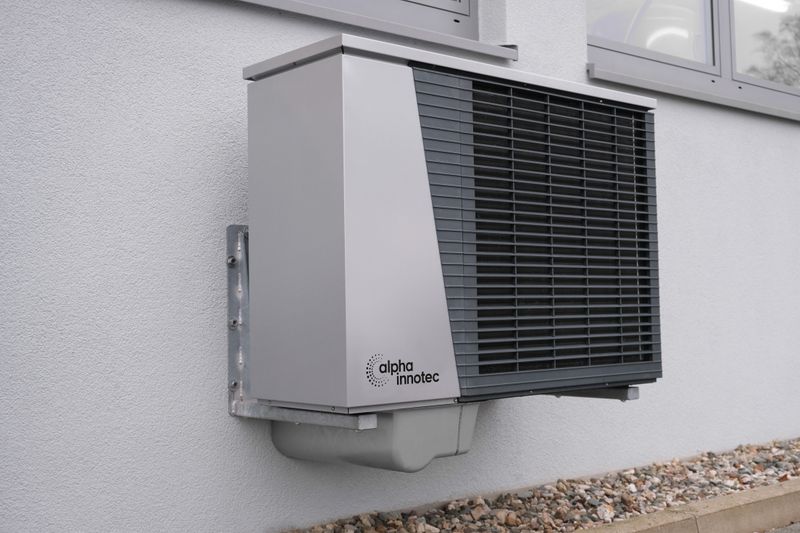
Do not quote heat-pump wiring from tonnage, a sales brochure, or a neighboring installation. Get the exact outdoor-unit, indoor-unit, air-handler, and electric-heat model numbers, then read the nameplates and matched-system installation instructions. The decisive fields are usually voltage, phase, minimum circuit ampacity (MCA), maximum overcurrent protection (MOCP), and any separate circuit requirements.
That information tells the electrician how to evaluate conductors, breaker or fuse protection, disconnects, service capacity, routing, and permits. HVAC sizing and electrical sizing are related but different scopes.
The nameplate fields that control the plan
| Field | What it tells the contractor | What it does not tell you |
|---|---|---|
| Voltage and phase | Required supply class, such as a listed 115 V or 208/230 V single-phase connection | Whether the existing circuit is suitable |
| MCA | Minimum circuit ampacity used in conductor selection under applicable HVAC rules | Normal running amps or automatic breaker size |
| MOCP / Max fuse or breaker | Largest permitted overcurrent device for the listed equipment | Permission to use that size with any conductor or panel |
| Rated current / RLA / FLA | Equipment or component operating information defined by the manufacturer | Whole-house service impact by itself |
| Minimum/maximum circuit or fuse data | Model-specific protection and installation boundaries | A universal value for all units of the same capacity |
Motor-compressor circuits follow code provisions that differ from ordinary general-use circuits. It can be correct for the permitted breaker or fuse rating to be higher than the MCA because the protective device must tolerate starting behavior while the conductors are selected under the HVAC rules. Do not “correct” that relationship using a generic wire-and-breaker chart.
Contractor-prep workflow
1. Lock the matched equipment selection
Capture model numbers for the outdoor unit, every indoor head or air handler, branch box, auxiliary heat kit, base-pan heater, condensate pump, and controls. Multi-zone combinations must be approved by the manufacturer. A submittal for a similar family is not enough.
If the model changes after the quote, reopen the electrical scope. A 115-volt single-zone unit, a 208/230-volt multi-zone system, and a ducted heat pump with electric auxiliary heat can have very different supply needs.
2. Photograph nameplates and obtain manuals
Ask for clear photos or official submittals showing:
- Model and serial identifiers
- Voltage range, phase, and frequency
- MCA and MOCP or maximum fuse/breaker language
- Indoor-unit power source and interconnecting-conductor requirements
- Accessory and auxiliary-heat circuit data
- Disconnect and overcurrent instructions
Use the current manufacturer document for the exact model. Daikin’s current product pages, for example, provide separate installation manuals for specific equipment variants; that structure reinforces why family-level assumptions are unsafe.
3. Evaluate service and panel capacity
An empty breaker space does not prove capacity. The electrician evaluates service rating, panel condition, calculated load, existing large loads, heating changeover, and any demand or load-management provisions allowed locally.
The panel and load calculation guide explains the difference between physical space and calculated capacity. The EV load-management comparison shows how another major electrification load can interact with heat-pump planning.
If an old fuel-fired furnace is being replaced, document the loads being removed as well as those being added. Auxiliary resistance heat can materially change the result and may require its own circuits.
4. Define disconnect and service access
Outdoor HVAC equipment generally needs a disconnect within sight and readily accessible under the adopted code, with location and working access coordinated with the unit. Manufacturer instructions may specify a fused or non-fused arrangement based on the listed protection data.
Do not place the disconnect behind the unit, where the cover cannot open, or where snow, vegetation, fencing, stored objects, or refrigerant piping blocks access. The electrical panel working-clearance guide provides a useful equipment-space screening approach, although the exact rules for the disconnect and unit must be reviewed separately.
5. Plan the conductor route
Walk the route from the source panel to the disconnect and equipment. Record:
- Indoor versus outdoor and wet-location segments
- Raceway, cable, fittings, supports, and equipment whip
- Attic, crawl-space, finished-wall, roof, or exterior access
- Conductor length and voltage-drop review
- Physical damage, sunlight, temperature, bundling, and rooftop conditions
- Firestopping, penetrations, condensate, and water-management conflicts
- Indoor-to-outdoor interconnect cable required by the listing
Do not assume ordinary indoor cable is permitted in a wet raceway or that a manufacturer communication/power cable can be substituted. The conduit types comparison helps organize route questions for the electrical contractor.
6. Assign permit and coordination scope
Clarify who supplies the breaker or fuses, disconnect, raceway, whip, surge protection, service upgrades, and final connections. Identify who obtains the electrical and mechanical permits, requests inspections, coordinates utility work, energizes the equipment, and handles corrections.
The HVAC contractor should not quote “power by owner” without a defined handoff point. The electrician should not size a circuit from a preliminary equipment capacity. Both need the same approved submittal.
Quote-scope checklist
- Exact outdoor, indoor, auxiliary-heat, and accessory model numbers
- Nameplate photos and official installation manuals
- Voltage, phase, MCA, and MOCP for every required supply
- Existing service and panel exterior labels
- Calculated-load responsibility and removed-load credit
- Breaker/fuse and disconnect type, rating, and location
- Route length, wiring method, penetrations, and restoration
- Wet-location, temperature, bundling, and physical-protection factors
- Surge-protection and manufacturer warranty requirements
- Electrical/mechanical permit and inspection ownership
- Startup boundary and correction responsibility
Stop if anyone proposes sizing solely from Btu/h, reusing an unknown circuit, increasing a breaker without circuit evaluation, omitting an auxiliary-heat load, or energizing before inspection. Use the electrical permit guide to ask the AHJ which work requires permits locally.
The U.S. Department of Energy’s ductless heat-pump inspection checklist calls for passed local inspections, secured electrical service, a controlled disconnect, and installation to manufacturer recommendations. DOE also notes that some homes need panel work for new electric equipment. Finally, compare the exact selection with a current manufacturer source such as Daikin’s model-specific mini-split documentation. The best quote is the one where every party prices the same equipment and electrical boundary.

Amperage HQ Editorial Team
Independent trade-focused editorial team