Wiring a 3-Way Switch: A Complete Guide
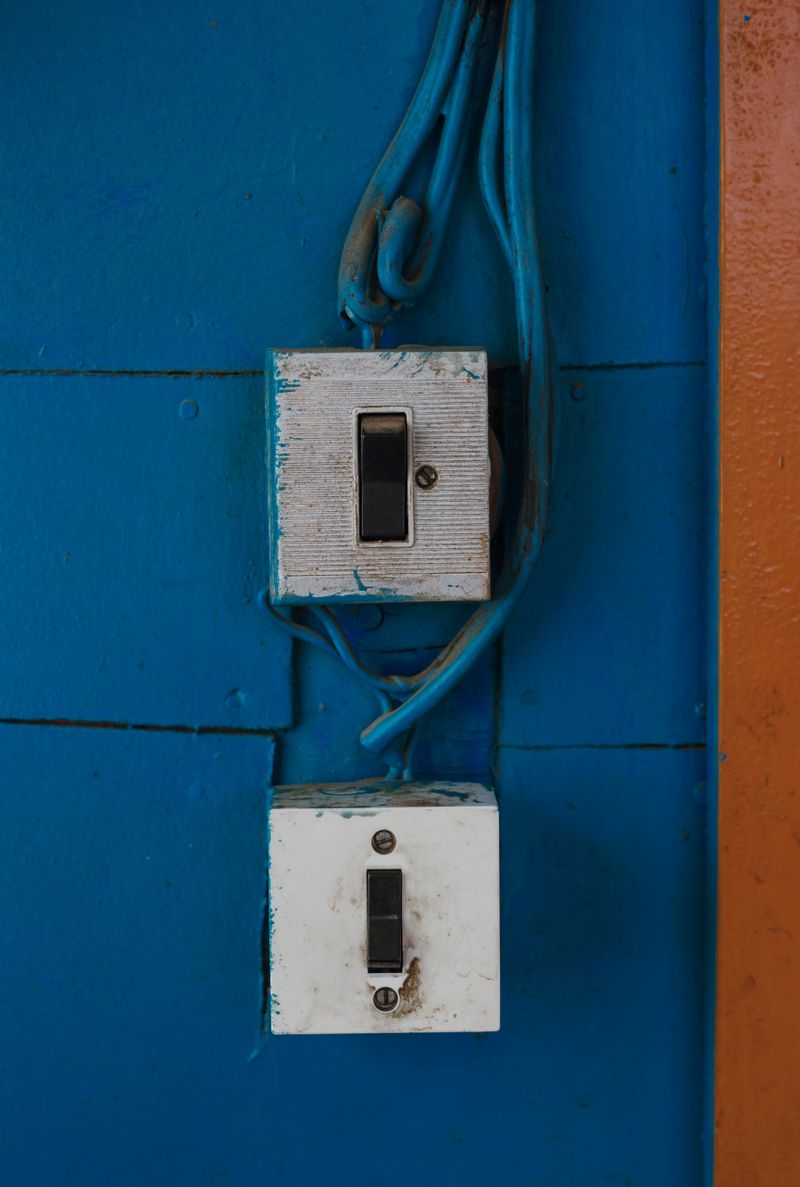
A 3-way switch setup lets you control a single light fixture from two different locations — at the top and bottom of a staircase, at both ends of a hallway, or from two entrances to a room. The wiring is more complex than a standard single-pole switch, but once you understand the underlying logic, installation is straightforward.
How 3-Way Switches Work
Unlike a standard (single-pole) switch that simply opens or closes one circuit, a 3-way switch is a single-pole, double-throw (SPDT) switch. It has three terminals:
- Common terminal (usually darker in color — black or darker brass): This is the traveler that either receives power from the panel or sends power to the light fixture, depending on the switch’s position in the circuit.
- Traveler terminals (two lighter-colored terminals): These connect to the matching traveler terminals on the other 3-way switch via two “traveler” wires.
When you flip a 3-way switch, it changes which traveler wire is connected to the common terminal. The light turns on when both switches create a complete path — hot travels from the panel through one switch’s common, across one of the two travelers, into the second switch’s common, and on to the light fixture.
Understanding Traveler Wires
The two wires running between the pair of 3-way switches are called travelers. They carry current back and forth depending on the switch positions. In a 3-wire cable (14/3 or 12/3), the red and black conductors typically serve as travelers.
The key thing to remember: travelers always connect traveler terminal to traveler terminal, never to common.
Wiring Configurations
There are three common wiring configurations for 3-way circuits:
Configuration 1: Power at the First Switch Box
Panel → Switch 1 (common) → Travelers → Switch 2 (common) → Light → Neutral back to panel- The hot wire from the panel enters Switch Box 1 and lands on the common terminal of Switch 1
- A 3-wire cable runs between Switch Box 1 and Switch Box 2 — the two travelers connect traveler terminal to traveler terminal
- The neutral from the panel is spliced through to the light (required by 2011+ NEC — neutral must be present in switch boxes)
- From Switch Box 2, a 2-wire cable runs to the light fixture — the common of Switch 2 carries switched hot to the light
Configuration 2: Power at the Light
- The hot wire enters the light fixture box first
- A 3-wire cable runs from the fixture to each switch box
- This is common in older homes — the neutral may not be present at the switch boxes in this configuration
Configuration 3: Power at the Second Switch Box
The reverse of Configuration 1 — power enters at the far switch rather than the first.
Step-by-Step Installation
This example assumes Configuration 1 (power entering at the first switch box). Always verify your actual configuration before wiring.
What You’ll Need
- Non-contact voltage tester
- Flathead and Phillips screwdrivers
- Wire stripper
- 14/3 or 12/3 cable (matching your circuit amperage)
- Two 3-way switches
- Needle-nose pliers
- Electrical tape (red and black)
Step 1: Turn Off Power and Verify
Turn off the circuit breaker. Test every wire in both switch boxes with a non-contact voltage tester to confirm all are dead.
Step 2: Identify Your Wires
In each switch box, identify your cables and conductors. In a properly wired 3-way circuit:
Switch Box 1 (where power enters):
- 2-wire cable from panel: black (hot), white (neutral)
- 3-wire cable to Switch Box 2: black, red, white
Switch Box 2:
- 3-wire cable from Switch Box 1: black, red, white
- 2-wire cable to light fixture: black, white
Step 3: Wire Switch 1
- Connect the incoming black (hot from panel) to the common terminal (dark-colored screw) of Switch 1
- Connect the black wire of the 3-wire cable to one traveler terminal
- Connect the red wire of the 3-wire cable to the other traveler terminal
- Splice the neutral wires together (both whites from the 2-wire panel cable and the 3-wire cable) with a wire nut — neutral is not connected to the switch itself
Step 4: Wire Switch 2
- Connect the black wire of the 3-wire cable from Switch 1 to one traveler terminal of Switch 2
- Connect the red wire from the 3-wire cable to the other traveler terminal
- Connect the black wire of the 2-wire cable to the light to the common terminal (dark screw) of Switch 2
- The white wire of the 2-wire cable to the light carries neutral — splice it with any other neutrals in the box
Step 5: Wire the Light Fixture
- Black (switched hot from Switch 2 common) → fixture black lead
- White (neutral) → fixture white lead
- Ground → fixture ground
Step 6: Test the Wiring
Restore power. The light should turn on and off from each switch independently. If it doesn’t work in all four switch combinations (up/up, up/down, down/up, down/down), a wire is connected to the wrong terminal.
Common Mistakes
- Connecting travelers to the common terminal: The traveler wires go to the two lighter-colored traveler terminals — never the dark common terminal.
- Using a standard switch: 3-way switches have three terminals. Standard single-pole switches only have two load terminals — they are not interchangeable.
- Crossing travelers: Both travelers should pair up — if you connect the red at one switch to a traveler terminal, connect the red at the other switch to the matching traveler terminal.
- No neutral at the switch box: 2011+ NEC requires a neutral conductor to be present (though not necessarily connected) in switch boxes for single-phase dwelling units. This allows future smart switch installation.
Before disconnecting an existing 3-way switch, photograph every wire and tag the common conductor. Losing track of the common is the most common reason a replacement 3-way circuit fails.
Smart Switches and 3-Way Wiring
Most smart switches require a neutral wire at the switch box — which older 3-way configurations often lack. Before buying a smart switch system, verify whether your switch boxes have neutrals. Some smart switch systems (Lutron Caseta, for example) are designed to work without a neutral wire. Always read the installation requirements for your specific smart switch model.
Once you’ve mastered the 3-way wiring, adding a third control point (4-way switch) is a natural next step — 4-way switches connect between any pair of 3-way switches and simply cross or pass through the travelers.
See Also
- Smart switch installation — ready to add smart control to a 3-way circuit? This guide covers the neutral wire requirements and the brand-specific approaches for retrofit 3-way smart switches
- Lighting circuit troubleshooting — if your 3-way circuit isn’t working correctly after installation, use this systematic diagnostic guide to find the fault
- How to wire a standard outlet — if you’re new to wiring, start with this foundational guide before tackling the more complex 3-way circuit

Amperage HQ Editorial Team
Independent trade-focused editorial team